
How to Grow Kailan (Chinese Kale) at Home in Malaysia
How to grow kailan (Chinese kale, 芥兰) in Malaysian pots and polybags: sowing, spacing, feeding, caterpillar control and harvesting stems with side shoots.
- Difficulty
- Easy
- Days to harvest
- 45–60 days
- Updated
- 2026-11-04
Yes — kailan (Chinese kale, 芥兰) is one of the best brassicas for lowland Malaysia. Unlike cabbage or broccoli, it does not need to form a head, so our heat is much less of a problem, and it grows happily in pots and polybags. You can cut the first thick, tender stems in about 45–60 days from sowing, and the plant then sends out side shoots for a second and third harvest. The one key tip: harvest the main stem when the flower buds are just visible but still tightly closed — once the yellow flowers open, the stems quickly turn tough and fibrous.
Quick facts
| Item | Kailan |
|---|---|
| Sun | 5–6 hours; full morning sun, light afternoon shade on hot balconies |
| Sowing depth | About 0.5–1 cm |
| Germination | 4–7 days |
| Spacing | 15–20 cm between plants; 25–30 cm if you want side shoots |
| Days to harvest | About 45–60 days from sowing for the main stem; side shoots 2–3 weeks later |
| Container | At least 20 cm deep; a medium polybag holds one or two plants |
| Support | None needed |
Spot and container
Kailan wants more sun than leafy pak choy. A balcony railing or yard spot with at least five hours of direct sun gives thick, juicy stems. With less light it still grows, but the stems are thin and the plants lean towards the light. On a very hot west-facing balcony, light afternoon shade keeps the leaves from scorching.
Use pots, polybags or planter boxes at least 20 cm deep, because kailan grows a deeper root system than most leafy greens and stands for longer if you harvest side shoots. A long styrofoam box can hold three or four plants in a row. Drainage holes are essential.
Soil and potting mix
A rich, well-drained mix gives the best stems:
- 2 parts potting mix or garden soil
- 1 part compost or well-rotted manure
- A handful of burnt rice husk or cocopeat
Like other brassicas, kailan prefers soil that is not acidic. A little garden lime mixed in before planting helps with acidic garden soil and reduces club root risk. Do not plant kailan in soil where sick cabbage-family plants grew recently.
How to sow kailan step by step
- Decide: tray or direct. Kailan can be direct sown in its pot or started in a tray and transplanted. Trays make it easier to protect seedlings from flea beetles.
- Moisten the mix first.
- Sow 2–3 seeds per spot or cell, 0.5–1 cm deep, and cover lightly.
- Keep moist in a bright, sheltered place. Seedlings appear in about 4–7 days.
- Move into sun as soon as they sprout so they grow short and sturdy.
- Thin to one plant per spot when they have 2 true leaves, snipping the extras with scissors. The thinnings are edible.
- Cover with insect netting from the start if moths and flea beetles are common in your area.
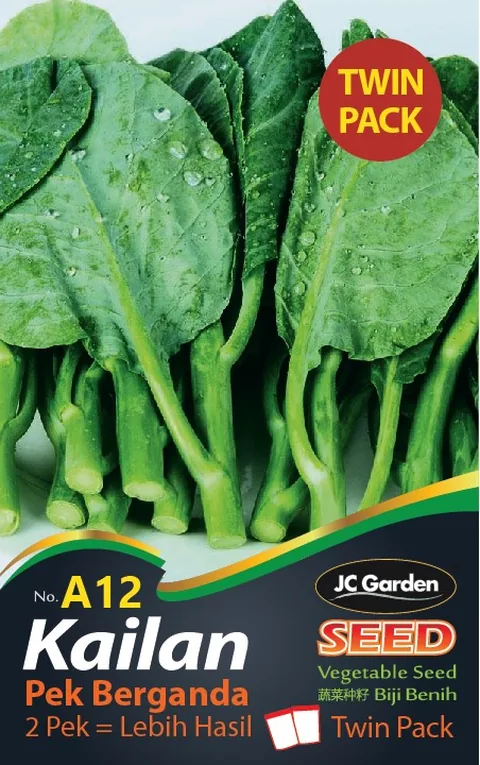
Kailan (Chinese Kale) Seeds
Heat-tolerant Chinese kale for pots — cut thick stems, then keep harvesting the side shoots.
Transplanting and spacing
Move tray seedlings to their final pot at 3–4 true leaves, usually 2–3 weeks after sowing, planting in the late afternoon and shading for a day or two. Space them 15–20 cm apart for a single harvest of big stems, or 25–30 cm if you plan to keep the plants for side shoots. Crowded kailan gets leggy and catches leaf disease more easily in humid weather.
Watering in hot and rainy weather
- Hot weather: keep the mix evenly moist. Water deeply in the morning and check small pots again in the late afternoon. Drought makes the stems hollow and bitter.
- Rainy weather: check drainage, lift pots off the ground and skip watering when the soil is already wet. Clear yellow lower leaves so air can move around the stems.
- Water the soil, not the leaves, and do it early in the day.
Feeding
Kailan is a heavy feeder for its size. Mix compost into the soil at planting. Once plants have 4–5 true leaves, feed every 7–10 days with a diluted liquid fertilizer, or give a small amount of balanced granular NPK around the pot edge every 2–3 weeks. After cutting the main stem, feed again to push strong side shoots.
Common pests and diseases in Malaysia
- Diamondback moth caterpillars. Small green caterpillars that wriggle and drop on a silk thread; they chew windows in leaves and attack the growing tip. Use netting, check under leaves every few days and hand-pick. If they build up, spray neem oil or a Bt (Bacillus thuringiensis) product in the evening, covering leaf undersides.
- Flea beetles. Tiny black jumping beetles that riddle seedlings with shot holes. Netting and fast early growth help; older plants usually outgrow the damage.
- Aphids. Clusters on young leaves and flower buds. Blast them off with water and follow with neem or mild soap spray.
- Club root. Plants stay stunted and wilt on hot afternoons; roots are swollen and lumpy. Remove the plants with their roots, bin them, and grow your next brassicas in fresh, limed mix.
- Soft rot. Stems or the base turn soft, slimy and smelly, often after rain or where a stem was cut. Make clean cuts on dry days, improve airflow and remove rotting plants.
- Leaf spot and downy mildew. Spots or yellow patches with fuzz underneath in damp weather. Remove affected leaves and avoid wetting the foliage.
Harvesting
- Main stem: at about 45–60 days, when the central stem is thick and a small cluster of flower buds is visible but not yet open, cut it about 15–20 cm long with a sharp knife or shears, leaving several leaves on the plant.
- Side shoots: new shoots grow from the leaf joints below the cut. Harvest them the same way, before the flowers open, about 2–3 weeks later.
- Baby kailan: you can also pull whole young plants at 30–35 days for tender "baby kailan".
Harvest in the cool morning. When the side shoots become thin and woody, pull the plant and resow.
FAQ
Why are my kailan stems thin? Usually too little sun, crowding or not enough feeding. Give at least five hours of direct sun, space plants properly and feed regularly.
My kailan flowered quickly. Can I still eat it? Yes — the flowering shoots are edible if you catch them young, but the stems will be tougher. Next time, harvest as soon as buds appear.
Can kailan grow on a condo balcony? Yes, if it gets several hours of direct sun. On a shadier balcony, pak choy or mustard greens are easier:
Is kailan the same as broccoli? They are close relatives, but kailan is grown for its leafy stems rather than a big flower head, which is why it copes so much better with lowland heat.