
How to Grow Mustard Greens (Sawi Pahit) at Home in Malaysia
How to grow mustard greens (sawi pahit, 芥菜) in Malaysia: sowing, pots, watering, feeding, caterpillar and flea beetle control, and gai choy for pickling.
- Difficulty
- Easy
- Days to harvest
- 30–45 days
- Updated
- 2026-11-04
Yes — mustard greens (sawi pahit, 芥菜) grow well in lowland Malaysia and are one of the easier brassicas for pots and polybags. Leafy types are ready to cut in about 30–45 days from sowing, while the big, thick-stemmed gai choy used for pickling (咸菜) takes closer to two months. The one tip that matters most: keep the plants growing fast with steady water and feeding, and cover them with fine netting from day one — caterpillars and flea beetles find brassicas quickly, and slow, stressed plants turn bitter and bolt.
Quick facts
| Item | Mustard greens |
|---|---|
| Sun | 4–6 hours; morning sun with light afternoon shade is ideal in the lowlands |
| Sowing depth | About 0.5 cm |
| Germination | 3–5 days |
| Spacing | 15–20 cm for leafy types; 30–40 cm for large gai choy |
| Days to harvest | 30–45 days (leafy types); about 55–70 days (gai choy for pickling) |
| Container | At least 15–20 cm deep for leafy types; 25 cm deep, about 15 litres, for gai choy |
| Support | None needed |
Spot and container
Mustard greens like bright light but not the harshest afternoon heat. An east-facing condo balcony, a terrace-house porch that gets morning sun, or a yard bed with some shade after about 1 pm all work well. On a west-facing balcony, a piece of light shade netting over the hottest hours helps stop the leaves from wilting and the plants from flowering early.
Leafy sawi pahit is shallow-rooted, so long planter boxes, styrofoam boxes with holes punched in the base, or medium polybags are fine. Gai choy grows into a big plant with a thick, swollen stem and needs a larger pot — roughly one plant per 15-litre container. Every container must drain freely; brassica roots rot quickly in soggy mix.
Soil and potting mix
Use a rich, crumbly mix that holds moisture but never stays waterlogged:
- 2 parts potting mix or garden soil
- 1 part compost or well-rotted manure
- A handful of burnt rice husk (sekam bakar) or cocopeat per pot for air
Brassicas prefer soil that is close to neutral rather than acidic. If you are using old soil or acidic garden soil, mix in a little garden lime (kapur pertanian) a week or two before sowing. Do not reuse soil that has grown sick brassicas — see club root below.
How to sow mustard greens step by step
- Choose your method. Leafy types can be direct sown in their final pot; gai choy is best started in a seedling tray and transplanted.
- Moisten the mix before sowing so the seeds land on damp soil.
- Sow thinly. In a pot, make shallow furrows 0.5 cm deep and 15 cm apart and drop a seed every 2–3 cm. In a tray, sow 1–2 seeds per cell.
- Cover lightly with about 0.5 cm of fine mix and press gently.
- Keep moist and shaded. Water with a fine spray. Seedlings usually appear in 3–5 days.
- Move into brighter light as soon as they sprout so they do not stretch.
- Cover with netting. Drape fine insect netting over a simple frame now, before moths and flea beetles arrive.
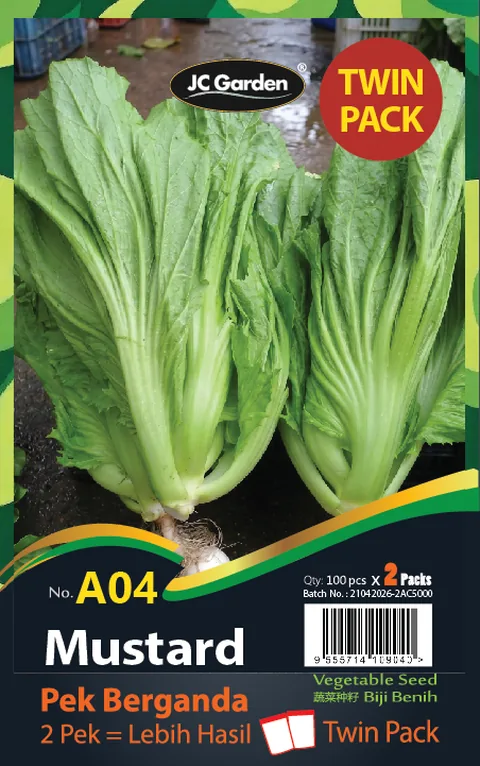
Mustard Greens Seeds
Fast leafy mustard for pots and polybags — cut young for stir-fries or grow big for pickling.
Not sure how thickly to sow a planter box? Work it out here:
Thinning and transplanting
Thin direct-sown seedlings in two steps: first to about 5 cm apart when they have 2 true leaves, then to 15–20 cm apart a week or two later. The thinnings are tender and good in soup.
Transplant tray seedlings when they have 3–4 true leaves, usually 2–3 weeks after sowing. Plant in the late afternoon, water in well and give a day or two of shade while the roots settle. Gai choy needs 30–40 cm between plants to develop its thick heart.
Watering in hot and rainy weather
- Hot, dry spells: water deeply in the morning; small pots may need a second check in the late afternoon. Letting the mix dry out is the fastest way to get bitter, tough leaves and early flower stalks.
- Rainy season: stop watering when the mix is already wet, keep drainage holes clear and lift pots onto bricks or pot feet. Under a porch roof or simple rain shelter, plants suffer far less from leaf spot and rot.
- Water at the base in the morning so the leaves dry before night.
Feeding
Mustard greens are leaf crops and want a steady supply of nitrogen. Mix compost into the potting mix, then start a liquid fertilizer when seedlings have 3–4 true leaves and feed every 7–10 days at the dilution on the label. Weaker and more often is safer than strong and rare. Gai choy, which grows for longer, benefits from an extra top-dressing of compost halfway through.
Common pests and diseases in Malaysia
- Diamondback moth caterpillars. Small, pale green caterpillars that wriggle backwards and drop on a silk thread when disturbed. They chew "windows" in leaves and can strip seedlings. Netting is the best defence. Check leaf undersides every few days and squash eggs and caterpillars; spray neem oil or a Bt (Bacillus thuringiensis) product in the evening if numbers build up.
- Flea beetles. Tiny black beetles that jump when touched and leave leaves peppered with shot holes. Most harmful to young seedlings. Netting, fast early growth and evening neem sprays help.
- Aphids. Grey-green clusters under leaves and on new growth. Hose them off and spray neem or a mild soap solution, covering the undersides.
- Club root. Plants wilt on hot afternoons and stay small; when pulled, the roots are swollen and knobbly. It lives in soil for years. Remove the plants with their roots, bin them (do not compost), use fresh mix and lime for the next brassica crop.
- Soft rot. Slimy, foul-smelling rot at the base or in the heart, worst in wet weather. Improve drainage and airflow, avoid wounding stems, and remove rotting plants straight away.
- Snails and slugs. Common after rain. Pick them off at night with a torch.
More organic fixes are in the pest control guide:
Harvesting
- Leafy sawi pahit: from about 30 days, pick the outer leaves and let the centre keep growing, or cut the whole plant at the base at 35–45 days.
- Gai choy for pickling: harvest the whole plant once the heart is thick and firm, usually around 55–70 days, before a flower stalk appears. Wilt the leaves in the sun for a few hours before salting.
- Harvest in the cool of the morning. Once a flower stalk shoots up, the leaves turn more bitter — harvest everything and resow.
FAQ
Why are my mustard greens so bitter? A little bite is normal for sawi pahit, but strong bitterness comes from heat, dry soil and age. Keep them moist, give afternoon shade and harvest younger.
Is sawi pahit the same as gai choy? Both are mustard greens (Brassica juncea). Sawi pahit is usually a leafy type eaten fresh; gai choy refers to large, thick-stemmed types often grown for pickling. Grow them the same way, but give gai choy more space and time.
My plants flowered before they got big. What happened? Stress — heat, drought, root damage or a crowded pot — makes mustard bolt. Sow in smaller batches every 2–3 weeks so you always have a young crop coming.
Can I grow mustard greens with other vegetables? Yes. Choy sum and pak choy are grown the same way: