
How to Grow Celosia (Cockscomb) from Seed in Malaysia
How to grow celosia (bunga balung ayam) in Malaysia: plume, crested and wheat types, sowing, pots, watering, feeding, pests, drying flowers and seed.
- Difficulty
- Easy
- Days to harvest
- 60–90 days
- Updated
- 2026-11-04
Yes — celosia (bunga balung ayam, 鸡冠花) is made for lowland Malaysia. It loves heat and strong sun, tolerates short dry spells once established, and its feathery plumes or velvety "cockscomb" crests last for weeks. Most types start flowering about 8–12 weeks after sowing. The one tip that matters most: keep young plants growing steadily without stress — seedlings left too long in small pots or allowed to dry out often flower early on tiny, stunted plants.
Quick facts
| Item | Celosia |
|---|---|
| Sun | Full sun, 6 hours or more |
| Sowing depth | Very shallow — cover with 2–3 mm of fine mix |
| Germination | 5–10 days in warm weather |
| Spacing | Dwarf: 15–20 cm; tall: 25–35 cm |
| Days to first flowers | About 60–90 |
| Container | Dwarf: 15 cm pot; tall: 20–25 cm pot or polybag |
| Support | Tall plume and crested types: a stake in windy spots |
Types of celosia
- Plume celosia (Plumosa group) — upright, feathery flame-shaped plumes in red, orange, yellow, pink and purple. Branches and keeps producing side plumes. Dwarf types suit balcony pots.
- Crested celosia or cockscomb (Cristata group) — the wavy, brain-like velvety crests that give bunga balung ayam its name. Usually one large main head, with smaller heads on side shoots later.
- Wheat celosia (Spicata group) — slender, spiky pink or purple flower heads on tall, branching plants. Very good for cut and dried flowers.
All three grow the same way.
Choosing a spot and container
Choose the brightest place you have. On a condo balcony, the railing edge or a west-facing balcony with hot afternoon sun is fine — celosia handles heat that would scorch many other flowers. In a terrace-house yard, use it along sunny borders or in pots by the gate.
Use pots with drainage holes. Celosia dislikes wet, cold roots, so avoid saucers that stay full of water.
Soil and potting mix
A free-draining, moderately fertile mix works well:
- 2 parts potting mix or loose garden soil
- 1 part compost
- 1 part burnt rice husk (sekam bakar), perlite or coarse sand
Mix in the compost before planting. Celosia does not need very rich soil.
How to sow celosia step by step
- Fill a tray or small pots with fine, moist seed-starting mix.
- Sow thinly. The seeds are tiny, shiny and black. Sprinkle 2–3 seeds per cell, or scatter thinly across a pot.
- Cover very lightly with 2–3 mm of fine mix, just enough to hide the seed, and press gently.
- Water with a fine mist so the seed stays in place.
- Keep warm, moist and bright, out of heavy rain. Seedlings usually appear in 5–10 days.
- Thin to one seedling per cell once the first true leaves appear.
- Move them on promptly. Transplant when seedlings have 2–3 pairs of true leaves. Do not leave them stuck in small cells, or they may flower too early.
You can also sow directly in the final pot and thin to the strongest seedling.
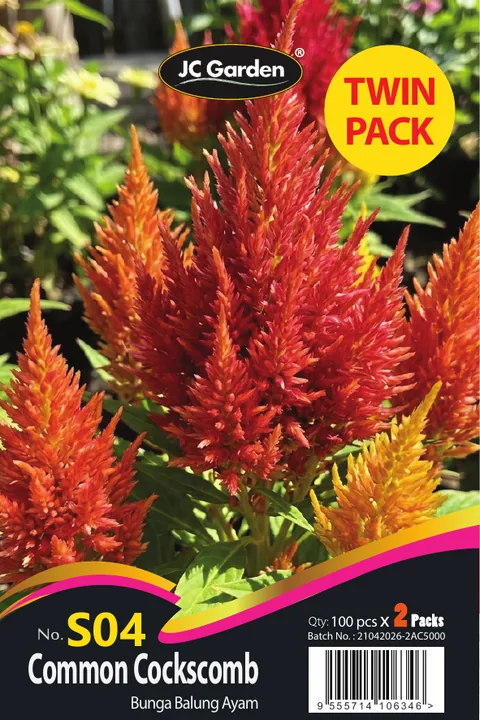
Common Cockscomb Seeds
Heat-loving celosia with long-lasting plumes or crests — great for hot, sunny balconies.
Transplanting and pinching
Celosia roots dislike disturbance. Water the tray first, then lift each seedling with its root ball intact. Plant at the same depth, in the late afternoon, and shade lightly for a day or two.
For plume and wheat types, pinch out the tip when the plant is about 15 cm tall to encourage more branches and more plumes. Do not pinch crested cockscomb types if you want one big crest.
Watering in hot and rainy weather
- Water when the top 2 cm of mix is dry. Young plants need steady moisture; established plants cope with short dry spells.
- Water at the base in the morning. Wet crests can hold water and start to rot.
- In the rainy season, skip watering if the mix is still damp and make sure pots drain. Tall plants may need staking before storms.
Feeding
Give a balanced liquid fertilizer every 2 weeks after transplanting, at the label rate. Once flower heads start forming, a feed slightly higher in potassium helps. Avoid heavy nitrogen, which gives lots of leaves and smaller flower heads.
Common pests and diseases in Malaysia
- Spider mites. Fine pale speckling and dull leaves, especially in hot, dry weather. Spray the undersides of leaves with water, then neem oil every 5–7 days in the evening.
- Aphids. Clusters on young leaves and flower stems. Spray off with water, then neem oil or a mild soap solution.
- Caterpillars. Holes in leaves. Hand-pick at dusk.
- Leaf spot. Brown spots on leaves during long wet spells. Remove affected leaves and improve spacing.
- Stem and root rot. Plants collapse at the base in waterlogged pots. Improve drainage and avoid overwatering.
- Snails and slugs. They chew seedlings after rain. Pick them off at night.
More organic fixes:
Deadheading, cutting and drying
Celosia flowers last a long time on the plant. On plume and wheat types, cut faded plumes back to a side shoot to encourage new ones. Crested types usually produce one main head, then smaller side heads.
For a vase, cut stems in the morning when the flower head is fully coloured and strip the lower leaves. To dry them, cut before the heads start to set seed, tie small bunches and hang them upside down in a dry, shaded, airy place for a couple of weeks. They keep their colour well.
Saving seed
When a flower head starts to fade and turn papery, shiny black seeds form inside and fall easily. Shake the head over a paper bag, dry the seeds in the shade and store them somewhere cool and dry. Celosia also self-seeds in the garden.
FAQ
Why did my celosia flower when it was still tiny? Usually stress: seedlings stayed too long in small cells, dried out, or were moved roughly. Transplant young and keep watering steady.
Can I grow celosia on a hot west-facing balcony? Yes. It is one of the best flowers for strong afternoon sun, as long as you water regularly.
How long does celosia keep flowering? Often several weeks to a couple of months. Sow a new batch every 4–6 weeks for continuous colour.
What else suits a hot, sunny spot? Marigold, zinnia and periwinkle all enjoy similar conditions: