
How to Grow Periwinkle (Kemunting Cina) from Seed in Malaysia
How to grow periwinkle (kemunting cina) in Malaysia: sowing in the dark, a fast-draining mix, avoiding root rot in the rain, pinching and toxicity.
- Difficulty
- Easy
- Days to harvest
- 60–90 days
- Updated
- 2026-11-04
Yes — periwinkle (kemunting cina, 长春花, Catharanthus roseus) is one of the toughest flowers for lowland Malaysia. It thrives in full sun, heat and dry spells that would wilt most flowers, and blooms almost non-stop once established. From seed, it usually starts flowering about 2–3 months after sowing. The one tip that matters most: grow it in a fast-draining mix and never let it sit wet — root rot during long rainy spells is what kills most periwinkles here. One safety point: all parts of periwinkle are toxic if eaten, so keep it away from children and pets who chew plants, and never use it as a home remedy.
Quick facts
| Item | Periwinkle |
|---|---|
| Sun | Full sun, 6 hours or more; tolerates light shade but flowers less |
| Sowing depth | About 0.5 cm; seeds germinate best in darkness |
| Germination | 7–15 days |
| Spacing | 20–30 cm |
| Days to first flowers | About 60–90 |
| Container | 15–20 cm pot per plant, with good drainage |
| Support | None |
Safety: periwinkle is toxic
Periwinkle contains strong natural alkaloids. Every part of the plant — leaves, stems, flowers and roots — is toxic if eaten. In some places it is used in folk remedies; please do not do this. Grow it as an ornamental only:
- Plant it where young children and pets that chew leaves cannot reach it.
- Do not add it to food, drinks or herbal teas.
- Wash your hands after pruning.
- If someone swallows part of the plant, seek medical advice promptly.
Choosing a spot and container
Give periwinkle the hottest, sunniest place you have: a west-facing balcony, a sunny porch step, the front of a terrace house, or a strip along the driveway. It is one of the few flowers that does well in strong afternoon sun and reflected heat from walls and concrete.
What it cannot handle is wet feet. Use pots with plenty of drainage holes and raise them slightly on pot feet. Avoid saucers that stay full of water. In the ground, plant on a slight mound or raised bed rather than in a low spot where rain collects.
Soil and potting mix
A gritty, fast-draining mix is more important than richness:
- 2 parts potting mix
- 1 part burnt rice husk (sekam bakar), perlite or coarse sand
- A small handful of compost
Avoid heavy clay and mixes with lots of cocopeat on their own, which hold too much water in the rainy season.
How to sow periwinkle step by step
- Fill a seedling tray or small pots with fine, moist, free-draining seed mix.
- Sow 1–2 seeds per cell, about 0.5 cm deep. The seeds are small and dark.
- Cover and keep dark. Periwinkle seeds sprout best in darkness, so cover them fully and place a piece of cardboard or a dark cloth over the tray.
- Keep moist, not wet. Check daily; mist the surface if it starts to dry.
- Remove the cover as soon as seedlings appear, usually in 7–15 days, and move the tray into bright light so they do not stretch.
- Be patient. Seedlings grow slowly for the first few weeks. Avoid overwatering during this stage, when they are most prone to damping-off.
- Pot on when seedlings have 3–4 pairs of true leaves.
For more on seeds that sprout in the dark:
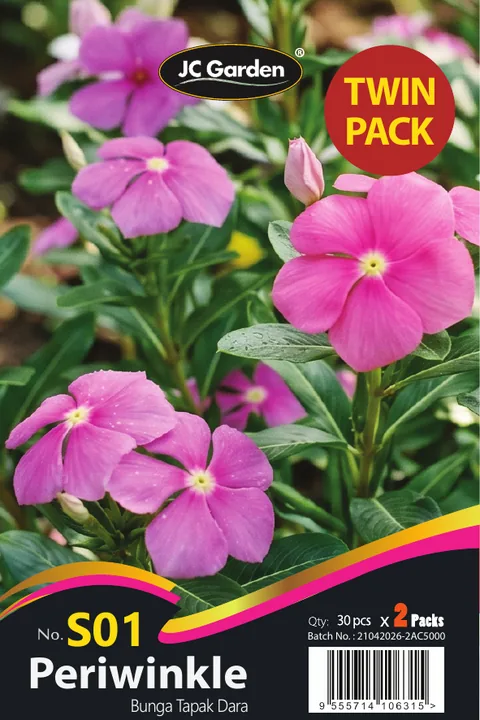
Periwinkle Seeds
Tough, heat- and drought-tolerant periwinkle that flowers for months. Needs fast drainage. Toxic if eaten.
Transplanting and pinching
Transplant in the late afternoon and water once, then let the top of the mix dry before watering again. Plant at the same depth as before; burying the stem deeper can encourage rot.
When plants are about 10–15 cm tall, pinch out the tip to make them branch. A bushy periwinkle carries far more flowers than a single upright stem. If plants become leggy after months of flowering, trim them back by about a third.
Periwinkle cuttings also root fairly easily. Take 8–10 cm tip cuttings, remove the lower leaves and stand them in a free-draining mix in light shade.
Watering in hot and rainy weather
- Hot, dry weather: periwinkle is very drought-tolerant once established. Water when the top 2–3 cm of mix is dry, not every day by habit. Pots in full sun may need water every 1–2 days in a hot spell.
- Rainy season: this is the danger period. Stop watering while the mix is damp, clear drainage holes and, if possible, move pots under a roof edge during weeks of constant rain.
- Water at the base in the morning. Wet leaves and stems overnight encourage disease.
Feeding
Periwinkle needs only light feeding. Mix a little compost into the potting mix at planting. Once plants are established, a small amount of balanced granular fertilizer every 4–6 weeks, or a half-strength liquid feed every 2–3 weeks, is plenty. Overfeeding gives soft, leafy growth that is more prone to rot.
Common pests and diseases in Malaysia
- Root and stem rot. The most serious problem. Plants wilt and collapse, often in wet weather, while the soil is still damp; the stem base may turn dark. There is usually no cure. Remove the plant and its mix, and replant in a grittier mix in a well-drained pot.
- Leaf spot and blight. Brown spots or dying shoots in long rainy spells. Remove affected parts, space plants and keep leaves dry.
- Aphids. Clusters on new growth. Spray off with water, then neem oil or a mild soap solution.
- Mealybugs and scale insects. White cottony clusters or small brown bumps on stems. Wipe off with a cotton bud dipped in diluted soap or alcohol, and spray with neem oil.
- Spider mites. Speckled, dull leaves in hot, dry weather. Spray leaf undersides with water and neem oil.
- Damping-off. Seedlings collapse at the base. Use clean mix and avoid overwatering young seedlings.
More organic fixes:
Flowering and deadheading
Periwinkle is "self-cleaning": old flowers drop off by themselves, so you do not need to deadhead. Simply trim untidy shoots now and then. Plants can flower for many months, and in good conditions they can be kept for a year or more before being replaced.
Periwinkle can self-seed in pots and gardens. Pull up unwanted seedlings while they are small.
FAQ
Why did my periwinkle suddenly wilt and die after rain? Almost always root or stem rot from waterlogged soil. Replant in a grittier mix, raise the pot and water less in the wet season.
Can periwinkle grow on a hot west-facing balcony? Yes, it is one of the best choices for strong afternoon sun, as long as the pot drains well.
Is periwinkle safe around children and pets? It is toxic if eaten. Place it out of reach of toddlers and pets that chew plants.
What else handles heat well? Celosia and marigold enjoy the same hot, sunny conditions: