
How to Grow Marigold (Bunga Tahi Ayam) from Seed in Malaysia
How to grow marigold in Malaysia from seed: French vs African types, sowing, pots, watering in rain, deadheading, pests and saving seed.
- Difficulty
- Easy
- Days to harvest
- 45–75 days
- Updated
- 2026-11-04
Yes — marigold (bunga tahi ayam, Tagetes) is one of the easiest flowers to grow from seed in lowland Malaysia. It loves heat and strong sun, and compact French marigolds usually show their first flowers about 6–8 weeks after sowing, while tall African marigolds take closer to 9–11 weeks. The one tip that matters most: give it full sun and a pot that drains fast, then keep removing faded flowers so the plant keeps blooming instead of setting seed.
Quick facts
| Item | Marigold |
|---|---|
| Sun | Full sun, 6 hours or more |
| Sowing depth | About 0.5 cm |
| Germination | 4–7 days in warm weather |
| Spacing | French: 20–25 cm; African: 30–40 cm |
| Days to first flowers | French: about 45–60; African: about 60–75 |
| Container | French: 15 cm pot or small polybag per plant; African: 20–25 cm pot |
| Support | French: none; African: a short stake helps in storms |
French or African marigold?
Both are sold as "marigold" and both are called bunga tahi ayam, but they grow differently:
- French marigold (Tagetes patula) — bushy, about 20–35 cm tall, with many small single or double flowers in yellow, orange, red-brown and bicolours. Quicker to bloom, ideal for balcony pots, window boxes and the edges of vegetable beds.
- African marigold (Tagetes erecta) — upright, often 60–90 cm tall, with large round pompom flowers in yellow or orange. These are the flowers strung into garlands and used for temple and festival offerings. They need more space and more time, and their big heads hold water after rain, so they are more prone to rot.
If you are a beginner or have a small balcony, start with French types. Grow African types if you want big flowers for cutting or for festivals — and sow about 10–11 weeks before you need them.
Choosing a spot and container
Marigolds want the hottest, brightest spot you have. On a condo balcony, the sunny railing edge is best. With less than about 5 hours of direct sun, plants grow tall and floppy and flower poorly.
Use pots with drainage holes. One French marigold fits a 15 cm pot; three fit in a 40–50 cm trough. Give each African marigold its own 20–25 cm pot or a large polybag.
Soil and potting mix
Marigolds are not fussy, but they hate wet, heavy soil. A good mix:
- 2 parts potting mix or loose garden soil
- 1 part compost
- 1 part coarse material such as burnt rice husk (sekam bakar) or perlite
Do not add a lot of manure or nitrogen fertilizer. Very rich soil gives big green plants with fewer flowers.
How to sow marigold step by step
- Fill a tray or small pots with fine, moist seed-starting mix.
- Lay the seeds flat. Marigold seeds are long and thin, with a dark end and a pale, papery tail. Lay them flat on the surface, about 2 cm apart.
- Cover lightly. Sprinkle about 0.5 cm of mix on top and press gently.
- Water with a fine spray so the seeds do not wash into one corner.
- Keep warm and bright, out of heavy rain. Seedlings usually appear in 4–7 days.
- Give them sun early. As soon as seedlings appear, move them into morning sun so they do not stretch.
- Pot on. When seedlings have 2–3 pairs of true leaves (about 2–3 weeks), move them to their final pots.
You can also sow directly into the final pot: drop 2–3 seeds per spot and keep the strongest seedling.
New to sowing seeds? The basics are here:
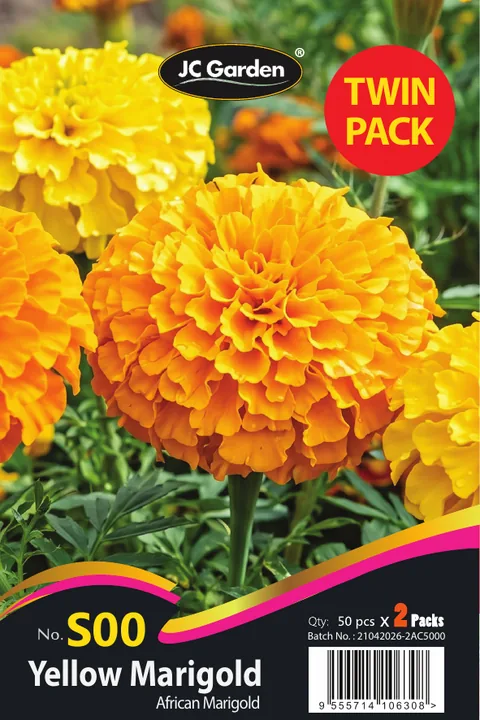
Yellow African Marigold Seeds
Easy, heat-loving marigold for sunny pots, balcony boxes and the edges of vegetable beds.
Transplanting and pinching
Transplant in the late afternoon and water well. Marigolds root easily along the buried stem, so you can plant leggy seedlings a little deeper than they were in the tray. Shade them lightly for the first 1–2 days.
For bushier French marigolds, pinch off the growing tip when the plant has 4–5 pairs of leaves. Each pinched stem branches into two. For African marigolds grown for big flowers, many growers skip pinching and instead let the main bud develop; a short bamboo stake keeps the stem upright in strong wind.
Watering in hot and rainy weather
Water when the top 2 cm of the mix feels dry. In hot, dry spells, small pots may need water every morning. Always water at the base, not over the flowers and leaves.
In the rainy season, marigolds suffer more from wet than from heat. Do not water if the mix is still damp, clear blocked drainage holes, and if you can, move pots under the edge of a roof or awning during weeks of constant rain. Wet, crowded plants are where most marigold diseases start.
Feeding
Mix compost into the potting mix at planting. After that, a light feed is enough:
- Once plants are established, give a balanced liquid fertilizer every 2 weeks at the label rate, or a little less.
- When buds start forming, switch to a feed with a bit more potassium than nitrogen if you have one.
If leaves are lush but there are few flowers, stop feeding for a few weeks. Not sure how much concentrate to use?
Marigolds as companion plants
Marigolds are worth growing around vegetable beds: they are cheerful, easy and draw in hoverflies and bees. Claims that they "keep all pests away" go too far, though. French marigold roots release compounds that may help reduce some root-knot nematodes in the soil, mainly when grown densely in the same spot for a season or more. Above ground, they may help deter or distract some pests, but results vary a lot. Treat them as a helpful extra, not a replacement for checking your plants and dealing with pests directly.
Common pests and diseases in Malaysia
- Spider mites. Fine speckling and dull, dusty leaves, sometimes with fine webbing, worst in hot, dry weather. Spray the undersides of leaves with water, then neem oil every 5–7 days in the evening.
- Aphids and thrips. Distorted buds and new growth. Blast off with water and spray neem oil or a mild soap solution.
- Caterpillars. Holes in buds and petals. Check at dusk and pick them off by hand.
- Grey mould (botrytis) and flower rot. Brown, mushy flowers after rain, especially on African types. Cut off affected flowers, space plants wider, and keep them out of constant rain if you can.
- Stem rot and collapse. The plant wilts while the mix is wet and the stem base turns dark. Usually caused by waterlogging. Remove the plant and use a better-draining mix next time.
More organic fixes:
Deadheading and harvesting flowers
Cut or pinch off each flower as soon as it fades, just above the next pair of leaves. This is the single biggest thing you can do to keep a marigold blooming for months.
To save seed, leave a few of the best flowers on the plant until the heads turn brown and dry. Pull out the thin seeds, dry them for a week in the shade, and store them in a paper envelope in a cool, dry place. Seed from F1 hybrid varieties may not grow true to the parent.
Can you eat marigold flowers?
The petals of Tagetes are used as a garnish in small amounts. They taste strong and slightly bitter. Only eat flowers you grew yourself without pesticides, and only the petals. For more on safe edible flowers:
FAQ
Why are my marigolds tall with few flowers? Usually too little sun or too much nitrogen. Move them to a brighter spot, stop feeding for a while and pinch the tips.
How long does a marigold plant last? With regular deadheading, often 2–4 months of flowering. When plants get woody and flower less, pull them out and sow a fresh batch.
Which flowers grow well alongside marigolds? Zinnias and cosmos enjoy the same sunny conditions: