
How to Grow Melampodium (Butter Daisy) from Seed in Malaysia
How to grow melampodium in Malaysia: an easy, heat-loving butter daisy that flowers for months with no deadheading. Sowing, spacing, watering and pests.
- Difficulty
- Easy
- Days to harvest
- 50–60 days
- Updated
- 2026-11-05
Yes, melampodium is one of the easiest flowers you can grow in lowland Malaysia. It comes from warm parts of the Americas, so our heat and humidity suit it well. Plants start flowering about 50–60 days after sowing and keep producing small butter-yellow daisies for months. It is also self-cleaning: old flowers drop off or are hidden by new growth, so there is no deadheading. The one tip that matters most: give it full sun and do not overfeed it, or it grows leafy and floppy with fewer flowers.
Quick facts
| Item | Melampodium |
|---|---|
| Sun | Full sun, 6 hours or more |
| Sowing depth | About 0.3 cm, a very light covering |
| Germination | About 5–10 days |
| Spacing | Thin to 10 cm first; final spacing 25–30 cm |
| Days to first flowers | About 50–60 days |
| Container | 20–25 cm pot per plant, or troughs and polybags |
| Support | Not needed |
Why it suits Malaysian gardens
Melampodium (Melampodium divaricatum, often sold as M. paludosum) forms a neat, rounded mound about 30–50 cm tall, covered in small yellow daisies. It shrugs off hot afternoons that make many cool-climate flowers sulk, and it does not need pinching, deadheading or staking. That makes it a good choice for beginners, busy gardeners, sunny borders, fence lines, roadside verges and big balcony planters. Bees and small butterflies visit the flowers.
It is grown as an ornamental. The pack label says "Vegetable Seed" as part of the general pack design, but melampodium is a flower, not a food plant.
Choosing a spot and container
Choose a sunny place. In part shade it still grows, but stems stretch, the mound opens up and flowering drops. On a condo balcony, put it at the brightest edge. In a terrace-house yard, it works well as an edging along a path or in front of taller plants.
In pots, one plant fills a 20–25 cm pot nicely by itself. In long troughs or beds, plant 25–30 cm apart. Every container needs drainage holes.
Soil and potting mix
Ordinary, well-drained soil is enough:
- 2 parts garden soil or potting mix
- 1 part compost
- A handful of burnt rice husk (sekam bakar) or perlite if your soil is heavy
Do not make the mix too rich. Melampodium flowers best in average soil.
How to sow melampodium step by step
- Choose your method. Sow straight into the bed or pot where it will flower, or start in a seedling tray and transplant later. Both work well.
- Prepare the soil. Fill trays or pots and water until moist all the way through.
- Sow shallowly. Place seeds about 2–3 cm apart and cover with roughly 0.3 cm of fine mix, just enough to hide them.
- Keep moist. Water gently with a fine rose or mister. Keep trays out of heavy rain so the seeds are not washed out.
- Watch for seedlings. They usually appear in about 5–10 days.
- Thin. When seedlings have their first true leaves, thin them to about 10 cm apart.
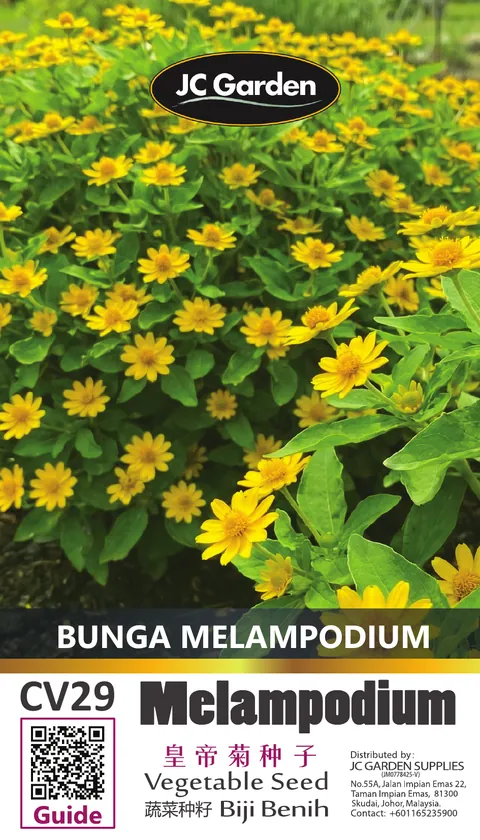
Melampodium Seeds
Mounds of small butter-yellow daisies for months — an easy heat lover that needs no deadheading.
Transplanting and spacing
Once seedlings have about 4 leaves, transplant them or thin direct-sown plants to their final 25–30 cm spacing. Plant in the late afternoon and water well. The plants spread into a mound, so resist planting too closely; crowded plants stay damp and are more likely to rot in the rainy season.
To plan how many plants fit a raised bed or planter:
Watering in hot and rainy weather
- Hot, dry spells: water every 1–2 days, when the top 2 cm of soil is dry. Pots in full sun dry out fastest.
- Rainy season: melampodium copes with rain well, but the soil must drain. Do not water while it is still wet.
- Water at the base in the morning. If plants wilt on a very hot afternoon but the soil is damp, they usually recover by evening; check again before adding more water.
Feeding
Feed lightly once a month with a balanced fertilizer, or top-dress with a little compost. Too much nitrogen gives lush leaves, soft stems and fewer flowers. If the plant is green and healthy but flowering less, cut back on feeding before adding more.
Self-seeding
Melampodium drops seeds readily. Small seedlings often pop up around the plants a few weeks later. Leave a few where you want them as free plants for the next round, and pull up the rest while they are small so they do not crowd other plants.
Common problems and pests in Malaysia
Melampodium has few serious problems, but watch for:
- Damping-off. Seedlings collapse at soil level in wet, crowded trays. Sow thinly, use clean mix and give good airflow.
- Stem rot. Plants wilt and blacken at the base in waterlogged pots. Improve drainage and avoid overwatering.
- Leggy, flopping plants. Too much shade or too much fertilizer. Move to more sun and feed less. Cutting the whole mound back by about a third refreshes it.
- Aphids. On tender tips. Rinse with water or spray diluted neem oil.
- Spider mites. Fine yellow speckling on leaves in hot, dry weather. Spray the leaf undersides with water.
- Caterpillars. Occasional chewed leaves. Pick off by hand.
For more organic fixes:
Keeping it flowering
You do not need to deadhead. To keep a planting looking good, trim any stray stems and remove yellowing lower leaves. After several months, when plants look woody or straggly, pull them out and replace them with self-sown seedlings or a fresh sowing. Sowing a small batch every few months keeps a border in flower all year.
FAQ
Do I need to remove dead flowers? No. Melampodium is self-cleaning; old flowers fall or are covered by new growth.
Why are my plants tall and floppy with few flowers? Usually too little sun or too much fertilizer. Give more sun and feed less.
Can it grow on a balcony? Yes, if the balcony gets at least about 6 hours of direct sun. Use a 20–25 cm pot with drainage holes.
What other easy flowers love the same conditions? Marigold, periwinkle and portulaca all thrive in hot, sunny spots: