
How to Grow Kale in Malaysia (Curly Kale in Lowland Pots and Beds)
Grow curly kale from seed in lowland Malaysia: tray sowing, afternoon shade, feeding, caterpillar control and picking leaves for months.
- Difficulty
- Medium
- Days to harvest
- 50–65 days
- Updated
- 2026-11-05
Yes, curly kale can grow in lowland Malaysia, but it is a cool-weather crop, so expect slower growth and smaller leaves than in the highlands. From seed you can start picking leaves in about 50–65 days, and a healthy plant keeps producing for several months if you only take the lower leaves. The one tip that matters most: protect it from caterpillars from day one with insect netting, and give it shade from the hot afternoon sun.
Quick facts
| Item | Curly kale |
|---|---|
| Sun | Morning sun; light shade in the afternoon in the lowlands |
| Sowing | 0.5–1 cm deep in seedling trays, 2–3 seeds per cell |
| Germination | 4–7 days |
| Spacing | 30–40 cm between plants |
| Days to harvest | First leaves about 50–65 days after sowing, then picking for months |
| Container | At least 25–30 cm deep and wide, one plant per pot |
| Support | None; a stake helps once the stem grows tall |
How kale copes with lowland heat
Kale likes temperatures around 15–25 °C. In our 30–34 °C afternoons it does not die, but it slows down, the leaves stay smaller and can taste stronger, and stressed plants attract more pests. You can sow at any time of year, but the slightly cooler, cloudier months from about October to March are usually easiest, as long as your pots drain well in the monsoon rain. Unlike many cool-weather greens, kale rarely flowers in the lowlands, so it will not suddenly bolt; it simply keeps growing a taller stem. It also rarely sets seed here, so use fresh seed for each batch.
Choosing a spot and container
The ideal place gets direct sun until about midday and bright shade after that, such as an east-facing balcony or a yard spot shaded by a wall in the afternoon. On a west-facing balcony, use 30–50% shade netting over the plants from noon onwards.
Kale is a big, leafy plant with a deep root system. Give each plant its own pot or polybag of at least 25–30 cm depth and width; bigger pots dry out more slowly and grow bigger plants. In a bed, space plants 30–40 cm apart so air can move between them.
Soil and potting mix
Kale is a hungry brassica and wants rich soil that holds moisture but drains freely:
- 2 parts potting mix or loose garden soil
- 1 part compost or well-rotted manure
- 1 part burnt rice husk (sekam bakar), cocopeat or coarse sand for drainage
Use a fine seedling mix for the trays and save the rich mix for transplanting.
How to sow kale step by step
- Fill a seedling tray with fine, moist seedling mix.
- Sow 2–3 seeds per cell, 0.5–1 cm deep, and cover lightly.
- Keep the tray in bright shade, not full sun, and keep the mix evenly moist.
- Wait 4–7 days for seedlings to appear. Move the tray into morning sun once they are up, or they will stretch.
- Thin to one seedling per cell by snipping the weaker ones with scissors when they have their first true leaf.
- Transplant at 4–5 true leaves. Plant one seedling per pot, slightly deeper than it sat in the tray, water well and keep it shaded for 2–3 days while it settles.
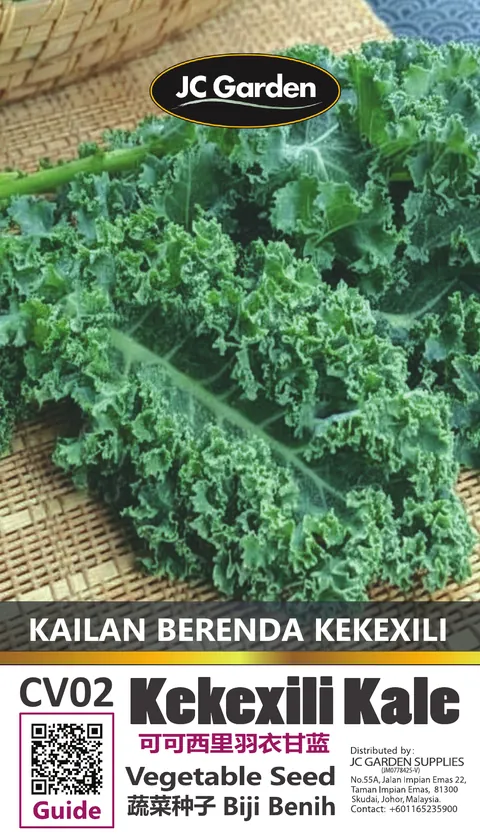
Kekexili Curly Kale Seeds
Curly-leaf kale for smoothies, salads and stir-fries — pick leaves from the same plant for months.
Watering in hot and rainy weather
- Hot weather: water deeply in the early morning so the plant starts the day fully watered. Small pots may need a second check in the late afternoon. A 3–5 cm mulch of dried leaves or rice straw keeps the roots cooler.
- Rainy season: make sure pots and beds drain. Kale sitting in soggy soil rots at the base and gets yellow, limp lower leaves. Remove yellowing leaves promptly.
- Water the soil, not the leaves, especially late in the day. Curly leaves hold water for a long time and wet leaves invite leaf rot.
Feeding
Start feeding about one week after transplanting. Kale is grown for its leaves, so use a nitrogen-rich fertilizer every 10–14 days: a liquid fertilizer at the label dilution, or a small handful of compost or organic fertilizer scratched into the surface. Feeding little and often is safer than heavy doses, which can burn roots in hot weather and make soft growth that pests love.
Common pests and diseases in Malaysia
- Caterpillars (diamondback moth and cabbage webworm). The number one problem. Small green caterpillars chew holes and can strip a plant in days. Cover plants with fine insect netting from transplanting onwards, check under the leaves every 2–3 days and pick caterpillars off. A Bt-based spray, or neem oil applied in the evening, helps when numbers build up.
- Aphids and whitefly. Grey-green or white insects clustered under leaves, often in hot, dry spells. Spray off with water or use a mild soap or neem solution, covering the undersides.
- Flea beetles. Tiny jumping beetles that leave pinholes in leaves. Netting keeps most of them out.
- Leaf spot and rot in wet weather. Brown or black patches on older leaves. Remove affected leaves, improve spacing and airflow, and avoid watering in the evening.
- Snails and slugs. Pick off at night after rain and keep the area around pots clear.
Harvesting
Start picking when the lower leaves are about the size of your palm, roughly 50–65 days after sowing:
- Pick from the bottom up, snapping or cutting the oldest leaves at the stem.
- Always leave the top crown and at least 5–6 leaves on the plant so it keeps growing.
- Take a few leaves per plant each week rather than many at once.
Young leaves are the most tender for salads and smoothies; bigger leaves are better for stir-fries, soups and kale chips.
Over the months the stem grows tall and bare like a small palm tree. Tie it to a stake if it leans. When the plant slows down, gets woody or pests become hard to manage, sow a fresh batch; starting new seeds every 2–3 months keeps a steady supply.
FAQ
Can kale grow on a condo balcony? Yes, in a large pot with morning sun and insect netting. A bright balcony with afternoon shade is close to ideal.
Why are my kale leaves small and tough? Usually heat stress, too little water or not enough food. Give afternoon shade, mulch, water consistently and feed every 10–14 days.
What grows more easily if kale struggles for me? Kailan and mustard greens are close relatives that cope better with lowland heat: