
How to Grow Balsam (Keembung) from Seed in Malaysia
How to grow balsam (keembung) in Malaysia from seed: sowing, sun or part shade, watering, feeding, spider mites and other pests, and saving seed.
- Difficulty
- Easy
- Days to harvest
- 50–70 days
- Updated
- 2026-11-04
Yes — balsam (keembung, 凤仙花, Impatiens balsamina) is an old favourite in Malaysian kampung and terrace-house gardens, and it grows easily in the lowlands. It sprouts in about a week and usually starts flowering about 7–10 weeks after sowing, with pink, red, purple, white or bicolour flowers clustered along the stem. The one tip that matters most: keep the soil evenly moist and check the undersides of the leaves often, because balsam wilts fast when dry and is a favourite of spider mites in hot weather.
Quick facts
| Item | Balsam |
|---|---|
| Sun | Full sun to part shade; morning sun with some afternoon shade is ideal |
| Sowing depth | About 0.5 cm |
| Germination | 5–10 days |
| Spacing | 20–30 cm |
| Days to first flowers | About 50–70 |
| Container | 15–20 cm pot or polybag per plant |
| Support | Usually none; shelter from strong wind, as stems are brittle |
About balsam
Balsam is an upright annual with thick, juicy stems, usually 30–70 cm tall. Its flowers grow close to the main stem among the leaves, so dwarf and "camellia-flowered" double types, which hold their blooms more visibly, are popular in pots. In many Asian households the petals were traditionally used to tint fingernails, which is one reason the plant is so familiar.
It is also called "touch-me-not": ripe seed pods burst open when touched and fling their seeds, which children love. This means balsam often comes back by itself in the same garden.
Choosing a spot and container
Balsam is more flexible about light than most flowers in this group. It flowers well in full sun, but in the strongest lowland sun it needs more water and is more prone to mites. A spot with morning sun and light shade in the afternoon — an east-facing balcony, the shade of a fence or a porch edge — suits it very well.
Its juicy stems snap easily, so keep it out of the windiest corners of a high-rise balcony. Use pots with drainage holes; balsam likes moisture but not waterlogged roots.
Soil and potting mix
Balsam likes a rich, moisture-holding but free-draining mix:
- 2 parts potting mix or loose garden soil
- 1 part compost
- A handful of cocopeat and burnt rice husk (sekam bakar) per pot
How to sow balsam step by step
- Fill a tray, small pots or the final pot with moist mix. Balsam transplants well, so either works.
- Sow. Press the round seeds about 0.5 cm deep, 2–3 cm apart in a tray, or 2 seeds per spot in a final pot.
- Cover and firm gently.
- Water with a fine spray and keep the mix moist.
- Keep in a warm, bright place, out of heavy rain. Seedlings usually appear in 5–10 days.
- Thin or pot on. Keep the strongest seedling per spot. Transplant tray seedlings when they have 2–3 pairs of true leaves.
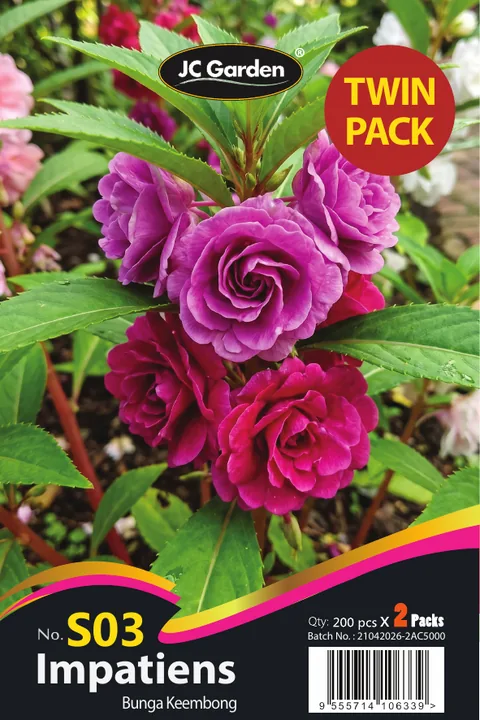
Impatiens (Balsam) Seeds
Classic keembung for pots and kampung-style gardens — easy from seed, happy in sun or part shade.
Transplanting and pinching
Transplant in the late afternoon, water well and give light shade for a couple of days. Balsam settles in quickly.
Pinching the top once plants have 4–5 pairs of leaves makes a bushier plant with more flowering stems. Some growers remove a few of the lower side shoots instead, so the main stem grows thick and the flowers show more clearly. Both work; choose based on the look you want.
Watering in hot and rainy weather
- Hot weather: balsam wilts quickly when dry. Water in the morning whenever the top 2 cm of mix is dry; small pots in full sun may also need a check in late afternoon. A layer of mulch helps hold moisture.
- Rainy weather: balsam tolerates rain, but its stems can rot at the base in soggy mix. Skip watering when the mix is wet and keep drainage holes clear.
- Water the soil, not the leaves, to reduce leaf disease.
Feeding
Mix compost into the potting mix at planting. Two to three weeks after transplanting, start a balanced liquid fertilizer every 2 weeks at the label rate. Once buds appear, a feed slightly higher in potassium supports flowering. Too much nitrogen gives big leaves that hide the flowers.
Common pests and diseases in Malaysia
- Spider mites. The most common balsam problem in hot, dry spells: fine pale or yellow speckling, dull leaves, sometimes fine webbing under the leaves. Spray the undersides of leaves with water every few days and use neem oil every 5–7 days in the evening. Keeping plants well watered also helps.
- Aphids. Clusters on new shoots and buds. Spray off with water, then neem oil or a mild soap solution.
- Caterpillars. Holes in leaves and flowers. Hand-pick at dusk.
- Powdery mildew and leaf spot. White patches or brown spots in humid, crowded plantings. Space plants, remove affected leaves and water at the base.
- Stem rot. The stem base turns soft and dark and the plant collapses, usually in waterlogged pots. Remove the plant and improve drainage.
- Snails and slugs. They love the juicy seedlings. Pick them off at night after rain.
More organic fixes:
Deadheading and saving seed
Balsam flowers drop by themselves, but removing developing seed pods keeps the plant flowering longer. When a plant is tired and woody, pull it out and sow again.
To save seed, let a few pods ripen. They turn pale and slightly swollen, and burst at a touch. Cup your hand around a ripe pod, or slip a small paper bag over it, before squeezing gently to catch the seeds. Dry them in the shade and store them somewhere cool and dry.
FAQ
Why do my balsam leaves look speckled and dusty? That is usually spider mites. Check the undersides of leaves, spray with water and neem oil regularly, and keep the plant well watered.
Can balsam grow on a shady balcony? It copes better than most flowering annuals with part shade, as long as it gets a few hours of direct sun or very bright light. In deep shade it gets leggy and flowers poorly.
Is balsam the same as the busy lizzie (impatiens) sold in nurseries? They are related, but busy lizzie (Impatiens walleriana) and New Guinea impatiens are different, more shade-loving plants, usually bought as young plants.
What can I grow in the sunnier spots? Zinnia and celosia suit full sun: