
How to Grow Globe Amaranth (Gomphrena) from Seed in Malaysia
How to grow globe amaranth (Gomphrena) in Malaysia: sowing, pots, watering, pinching for more flowers, pests, and cutting and drying the blooms.
- Difficulty
- Easy
- Days to harvest
- 60–80 days
- Updated
- 2026-11-05
Yes — globe amaranth (Gomphrena globosa, known locally as bunga butang) is one of the easiest flowers you can grow in lowland Malaysia. It loves heat and strong sun, shrugs off dry spells once established, and usually starts flowering about 60–80 days after sowing. Its small, round, papery flower heads in purple, magenta, pink or white then keep coming for months and last for weeks on the plant. The one tip that matters most: give it full sun and a mix that drains fast. Globe amaranth almost never fails from heat; it fails from soggy soil and shade.
Quick facts
| Item | Globe amaranth |
|---|---|
| Sun | Full sun, 6 hours or more |
| Sowing depth | About 0.5 cm; soak seeds a few hours first |
| Germination | 7–14 days |
| Spacing | Dwarf types 20 cm; taller types 25–30 cm |
| Days to first flowers | About 60–80 |
| Container | 15–20 cm pot per plant, or a long planter box |
| Support | Usually none; tall plants may need a short stake in exposed spots |
Choosing a spot and container
Put globe amaranth in your sunniest, hottest spot: a west-facing balcony railing, a rooftop, the front of a terrace-house yard or the edge of a driveway. Plants grow about 30–60 cm tall depending on the variety, with dwarf types staying lower. In less than about 5 hours of direct sun they grow floppy and flower poorly.
It does well in pots, polybags and window boxes. One plant fits a 15–20 cm pot; a long planter can hold several plants spaced 20–25 cm apart. Every container must have drainage holes.
Soil and potting mix
Globe amaranth prefers average, well-drained soil to a very rich one:
- 2 parts potting mix or garden soil
- 1 part burnt rice husk (sekam bakar), coarse sand or perlite
- A small handful of compost per pot
Rich, heavily fed soil gives soft, leafy plants with fewer flowers.
How to sow globe amaranth step by step
- Soak the seeds. The seeds sit inside fluffy, woolly coverings. Soak them in water for a few hours to overnight so the coverings soften and moisture reaches the seed.
- Prepare a tray or pots. Fill a seedling tray or small pots with fine, moist seed-raising mix.
- Sow. Place 2–3 seeds per cell or spot and cover with about 0.5 cm of mix. The seed germinates better in darkness, so do not leave it on the surface.
- Keep warm and moist. Water gently with a fine spray. Keep the tray out of heavy rain, which washes seed away and encourages damping-off.
- Wait patiently. Seedlings usually appear in 7–14 days, sometimes unevenly.
- Thin. Keep the strongest seedling per cell and snip the rest at soil level.
You can also sow directly where plants will flower; just keep the spot shaded from pounding rain until seedlings are up.
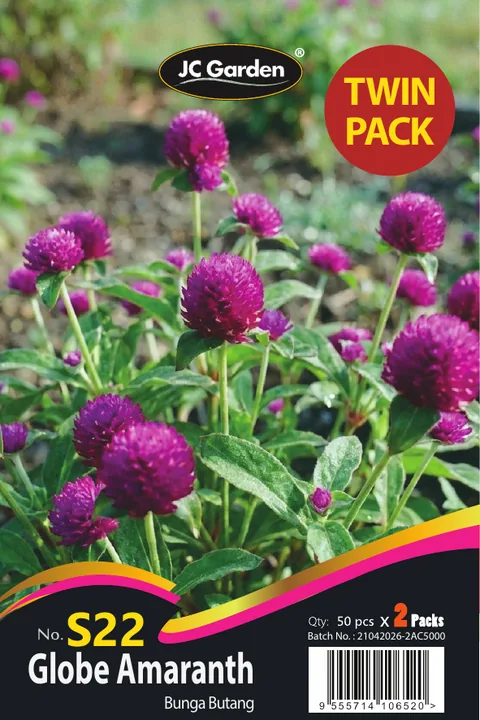
Globe Amaranth Seeds
JC Garden seed twin pack (2 packets). See the pack for sowing details.
Transplanting and pinching
Transplant seedlings when they have 2–3 pairs of true leaves, usually 3–4 weeks after sowing. Do it in the late afternoon, water well and give light shade for a day or two. Space them 20–30 cm apart.
When plants are 10–15 cm tall, pinch out the growing tip just above a pair of leaves. Side shoots grow from there, giving a bushier plant with many more flower stems. Taller varieties in windy spots may need a short bamboo stake, but most plants stand on their own.
Watering in hot and rainy weather
- Seedlings: keep evenly moist until they are well rooted.
- Established plants: water when the top 2–3 cm of mix is dry. In full sun a small pot may need water daily; a large planter less often. Globe amaranth tolerates short dry spells far better than wet feet.
- Rainy season: stop watering while the mix is still damp, and make sure pots never sit in saucers of water. Raise pots on pot feet or bricks during long wet spells.
- Water at the base in the morning so leaves dry quickly.
Not sure how often your pots need water? Use the estimator as a starting point:
Feeding
Light feeding is enough. Mix compost into the potting mix at planting, then give a diluted balanced or flower fertilizer (higher in potassium) every 3–4 weeks once flowering begins. Skip extra nitrogen; it produces leaves instead of flowers.
Common pests and diseases in Malaysia
Globe amaranth is tougher than most bedding flowers, but watch for:
- Damping-off. Seedlings collapse at the base, usually in wet, crowded trays. Use clean mix, sow thinly, water from below and give airflow.
- Root and stem rot. Plants wilt and yellow even though the soil is wet. This is waterlogging. Improve drainage, water less, and remove dead plants.
- Leaf spot. Brown or purplish spots during long rainy spells. Remove affected leaves and space plants for airflow.
- Aphids. Clusters on soft new growth and flower stems. Hose off, then spray neem oil or a mild soap solution in the evening.
- Spider mites. Fine pale speckling on leaves in hot, dry weather. Spray water under the leaves and follow with neem oil every 5–7 days.
- Caterpillars and snails. Holes in leaves, worst after rain. Pick off at dusk or at night.
Cutting, drying and deadheading
Globe amaranth is a favourite for cut and dried flowers because the heads keep their shape and colour.
- For a vase: cut stems in the morning when the flower heads are fully coloured. Strip the lower leaves and change the water every day or two. They last well in a vase.
- For drying: cut when the heads are fully coloured and firm, but before they elongate and look tired. Strip the leaves, tie small bunches and hang them upside down in a shaded, airy place. In our humidity this takes about 1–3 weeks; a room with a fan or air-conditioning dries them faster and reduces mould. Dried heads are lovely in arrangements, wreaths and craft projects.
- Deadheading: the flowers last a long time anyway, but cutting faded heads keeps the plant tidy and producing new stems.
The flowers attract butterflies and bees, so plants near your vegetables help bring pollinators in.
Saving seed
Leave a few heads to fade and dry completely on the plant. Rub them apart over a sheet of paper; the seeds are hidden in the papery bracts. Dry them in the shade and store in a paper envelope in a cool, dry place. Plants sometimes self-seed in the garden too.
FAQ
Is globe amaranth the same as the amaranth eaten as bayam? They belong to the same plant family but are different plants. Globe amaranth is grown as an ornamental flower; for the leafy vegetable see:
Why are my seeds slow to come up? The woolly seed coverings slow water uptake. Soak them before sowing, cover them lightly and keep the mix warm and evenly moist. Some seeds sprout a week later than others.
Can I grow it on a condo balcony? Yes, if it gets at least 5–6 hours of direct sun. It is one of the best flowers for hot, exposed balconies.
What grows well alongside it? Other sun-loving flowers such as celosia and zinnia: