
How to Grow Fennel (Leaf Fennel) from Seed in Malaysia
How to grow fennel in Malaysia: leaf fennel vs bulb fennel, direct sowing in deep pots, bolting in heat, keeping it apart from dill, pests and harvest.
- Difficulty
- Medium
- Days to harvest
- 50–70 days
- Updated
- 2026-11-05
Yes — fennel can be grown in lowland Malaysia, and it is not difficult once you know what to expect. This is leaf fennel: you grow it for the feathery, aniseed-scented fronds, ready to snip about 50–70 days after sowing, and later for its seeds, from about four months. It will not form the fat white bulb you see in imported supermarket fennel. The one key tip: sow it directly where it will grow, in a deep pot with morning sun and afternoon shade, because fennel dislikes being transplanted and sulks in strong afternoon heat.
Leaf fennel vs bulb fennel
There are two main kinds of fennel:
- Leaf (common) fennel grows tall and feathery and is grown for leaves and seed. This is the type in our pack, and the one that suits home gardens in Malaysia.
- Bulb (Florence) fennel forms a swollen white base. It needs a long, mild season; in constant lowland heat it usually bolts before a proper bulb forms, so it is unreliable here outside the highlands.
The seeds of leaf fennel are the same spice sold as jintan manis, so letting a few plants go to seed gives you a second harvest.
Quick facts
| Item | Fennel (leaf) |
|---|---|
| Sun | Morning sun with light afternoon shade in lowland heat |
| Sowing depth | 0.5–1 cm, direct where it will grow |
| Germination | About 7–14 days |
| Germination temperature | About 18–28°C |
| Thinning | First to 10 cm, then 20–30 cm |
| Days to harvest | Leaves from about 50–70 days; seeds from about 4 months |
| Container | At least 25 cm deep; one plant per 25–30 cm pot |
| Support | A stake for tall flowering plants in windy spots |
Choosing a spot and container
Fennel grows a long taproot, so depth matters. Use a pot at least 25 cm deep — 30 cm is better — or a raised bed. On a balcony, an east-facing position or a spot that gets shade after about 1 pm gives the best leaves. In full afternoon sun the plant tends to bolt quickly and the fronds turn tough.
Many gardeners prefer to give fennel its own pot rather than mixing it into a shared herb planter, since it grows tall and does not share space well.
Soil and potting mix
Use a loose, well-drained mix with compost:
- 2 parts potting mix or loose garden soil
- 1 part compost
- A handful of burnt rice husk (sekam bakar) or coarse sand for drainage
Avoid heavy clay that stays wet; the base of the stem can rot in waterlogged soil.
How to sow fennel step by step
- Soak the seed. Soak in water for a few hours before sowing to soften the seed coat.
- Fill a deep pot. Use moist mix to about 2 cm below the rim and water well.
- Sow in place. Make holes 0.5–1 cm deep and drop 2–3 seeds in each, spaced 20–30 cm apart (or a few spots per large pot).
- Cover and firm. Cover with mix and press lightly.
- Keep moist. Water gently every day in hot weather. Seedlings appear in about 7–14 days.
- Thin. When seedlings are a few centimetres tall, snip out the weaker ones so plants are 10 cm apart, then thin again to 20–30 cm as they grow. Snip with scissors rather than pulling, to avoid disturbing the roots left behind.
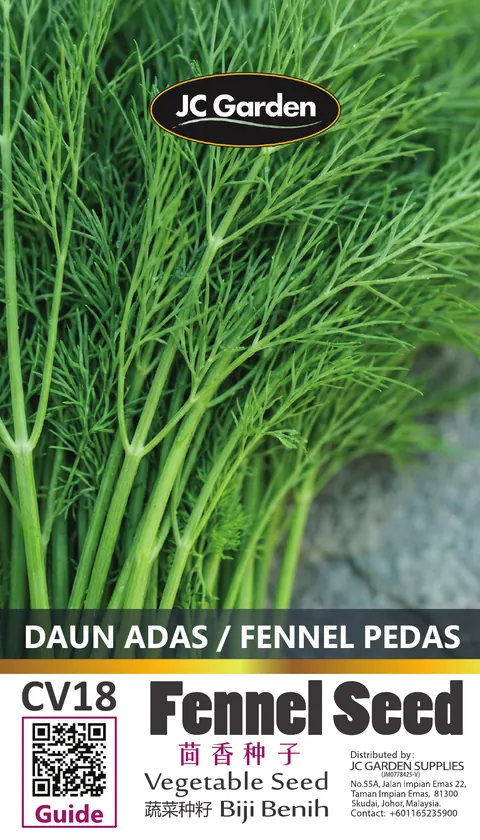
Fennel Seeds
Feathery, aniseed-scented herb for cooking and garnish — snip the leaves, then save the seeds.
Bolting in hot weather
Fennel is naturally inclined to bolt (send up a tall flower stalk) in our heat, especially if stressed by drought, a small pot or strong sun. Once it bolts, the plant stretches, leaves become finer and sparser, and energy goes into flowers and seed.
To get more leaves:
- Give afternoon shade, mulch and steady watering.
- Pinch out flower stalks early if you want leaves.
- Sow a new pot every 4–6 weeks so a young plant is always coming on.
- Or simply let one plant flower for seed and keep the others for leaves.
Keep it away from dill
Fennel and dill are close relatives and can cross-pollinate when they flower at the same time. The plants you are growing are not affected, but seed saved from them may grow into odd in-between plants with a muddled flavour. If you grow both and want to save seed, keep them far apart, or let only one of them flower at a time.
Watering in hot and rainy weather
- Hot spells: water deeply in the morning; check deep pots with a finger before watering again. Uneven watering encourages bolting.
- Rainy season: raise pots off wet ground and make sure they drain. Do not let water collect around the base of the stems.
Feeding
From about day 21, give a light feed every 2 weeks at half the label strength. Too much fertilizer makes soft, floppy growth that falls over and attracts aphids.
Common problems in Malaysia
- Aphids. Very common on fennel, clustering on young fronds and flower stalks. Spray with water or a mild soap or neem solution, covering the feathery leaves well.
- Caterpillars. Chewed fronds; check plants and pick off caterpillars by hand.
- Snails. Can wipe out young seedlings after rain. Check at night.
- Stem rot. Soft, brown base after waterlogging. Improve drainage; sow fresh in a better mix.
Harvesting
Leaves: once plants are about 25 cm tall, snip the outer fronds with scissors, taking no more than a third of the plant at a time. Use fresh with fish, in soups, omelettes and salads.
Seeds: let a few plants flower. When the seed heads turn from green to brown, cut them into a paper bag and dry for a week or two in the shade, then rub the seeds off. Store in a jar for cooking or for sowing.
FAQ
Why didn't my fennel form a bulb? This is leaf fennel, grown for fronds and seed. Bulb fennel is a different type that rarely bulbs in lowland heat.
Can I transplant fennel? It dislikes it. Direct sowing gives stronger plants; if you must, move only small seedlings with their root ball intact.
My fennel is flowering already. What now? Pick what leaves remain, let it set seed, and sow a fresh pot. Afternoon shade and steady water delay the next one.