
How to Grow Watercress in Malaysia (Pots, Water Trays and Cuttings)
Grow watercress (selada air) from seed in lowland Malaysia: surface sowing, pots standing in water, shade, clean water and cut-and-come-again harvests.
- Difficulty
- Medium
- Days to harvest
- 45–60 days
- Updated
- 2026-11-05
Yes, watercress can grow in lowland Malaysia, but be ready for a slower, fussier crop than kangkung. It naturally grows in cool, clean, flowing water, which is why most watercress in our markets comes from the highlands. At home it works best in a pot of fine soil standing in a tray of water, in bright shade. From seed, the first cutting is about 45–60 days away, and after that it regrows for several more cuts. The one key tip: never let it dry out, and keep both the plant and its water as cool as you can.
Quick facts
| Item | Watercress |
|---|---|
| Sun | Bright shade or morning sun only; no hot afternoon sun |
| Sowing | Scatter on the surface of wet soil; do not cover (very fine seed) |
| Germination | 7–14 days |
| Spacing | Thin to about 5 cm, then 10–15 cm between plants |
| Days to harvest | First cutting about 45–60 days after sowing |
| Container | A 15–20 cm pot with drainage holes, standing in a tray of water |
| Support | None |
What to expect in lowland heat
Watercress prefers temperatures below about 25 °C. In hot weather it grows slower, stems get thin and stringy, and plants may flower early, after which the leaves become smaller and stronger in taste. It is still worth growing; just give it the coolest, shadiest bright spot you have. The cooler, cloudier months from about November to March are usually the easiest time to start seeds.
Choosing a spot and container
Pick a place with bright, indirect light and, at most, a couple of hours of gentle morning sun: under a carport roof edge, beside a north- or east-facing wall, or on a covered balcony. Avoid west-facing spots and hot concrete floors; place pots on a stand or bricks if the floor bakes in the afternoon.
Use a plastic or clay pot about 15–20 cm wide with drainage holes, and stand it in a tray or basin so the bottom 3–5 cm of the pot sits in water.
Soil and potting mix
Watercress needs a fine mix that stays soaked without turning into mud:
- 2 parts fine garden soil or potting mix
- 1 part fine compost
- A little cocopeat to hold moisture
Sieve out lumps and stones so the tiny seeds sit in close contact with the surface.
How to sow watercress step by step
- Fill the pot with the mix, press it level and stand it in its water tray until the surface is dark and wet.
- Mix the seeds with a pinch of fine sand so you can spread them thinly.
- Scatter on the surface. Do not cover; the seeds are tiny and need light and moisture at the surface.
- Mist gently with a spray bottle so the seeds settle without washing away.
- Keep in bright shade. Cover loosely with a clear lid or plastic bag for the first week to keep the surface humid, but open it daily so it does not overheat.
- Wait 7–14 days for germination, keeping the surface wet the whole time.
- Thin to about 5 cm apart when seedlings have a few leaves, and later to 10–15 cm, or move extra seedlings into their own pots.
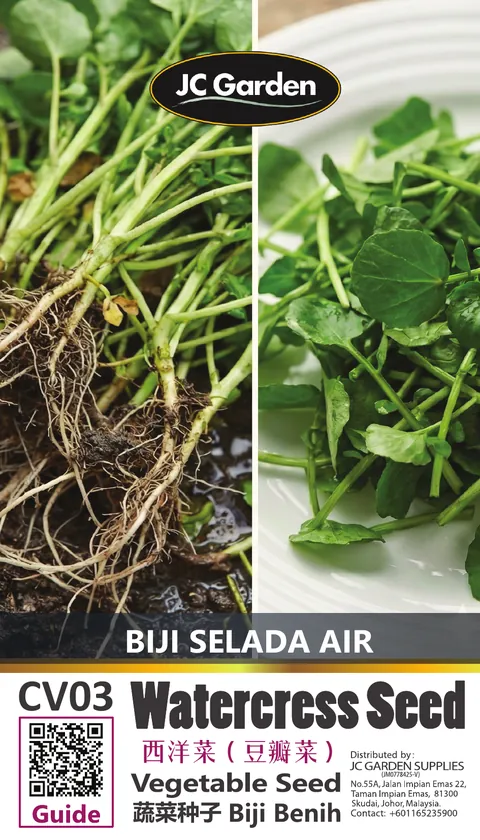
Watercress Seeds
Peppery leafy green that loves constant moisture — great for soups and blanched greens.
Starting from market cuttings
If seeds are slow, watercress also roots easily from stems. Take fresh, healthy stems from a bunch bought for cooking, strip the lower leaves and stand them in a glass of clean water in bright shade. White roots usually appear within a week or two. Plant the rooted stems into your wet pot. This is also the easiest way to restart a tired pot later.
Watering and keeping the water clean
- Keep 3–5 cm of water in the tray at all times, and change it every 2–3 days. Fresh water stays cooler, does not go sour, and stops mosquitoes from breeding.
- In hot weather, also water from the top once a day with cool water to refresh the soil and lower the temperature around the plants.
- In the rainy season the plant is happy, but do not let the tray overflow with dirty run-off. Tip out and refill after storms.
Growing watercress in water
Watercress also grows hydroponically. In a Kratky container the water can get warm in our climate, so keep it fully shaded and use a light-coloured, insulated box. A system where the water moves is better than still water.
Feeding
About three weeks after germination, give a very dilute liquid fertilizer, around half the strength on the label, every two weeks. Watercress dislikes strong fertilizer, and extra nutrients in the tray water encourage algae. After each harvest, a light feed helps the next flush.
Common pests and problems in Malaysia
- Aphids and whitefly. Small insects under the leaves and on soft tips. Rinse them off with a gentle spray of water or use a mild soap solution, then rinse the leaves well before eating.
- Caterpillars. Watercress is related to cabbage, so diamondback moth caterpillars will chew it. Pick them off, or cover the pot with fine netting.
- Snails. They love wet pots. Check at night and pick them off.
- Algae in the tray. Green water means too much light and nutrients. Change the water more often and shade the tray.
- Yellow, stringy plants. Too much heat or sun, or the plant is flowering. Move it to more shade, cut it back hard, and let it regrow, or restart from cuttings.
Harvesting
Make the first cut when plants are bushy and about 15–20 cm tall, roughly 45–60 days after sowing. Cut stems about 10 cm long with clean scissors, always leaving a few leaf nodes on each stem. The plant branches from those nodes and is usually ready to cut again in 2–3 weeks.
Pinch off flower buds as soon as you see them to keep the plant leafy. When stems become tough and leaves very small, cut the whole pot back or replant from fresh cuttings. Wash watercress well before cooking. Do not pick wild watercress from drains, ditches or streams, as you cannot know what is in that water.
FAQ
Does watercress need running water? No. A pot standing in a tray of clean water that you change every few days works well at home.
Why did my watercress seeds not come up? Usually they were buried too deep or the surface dried out for a few hours. Sow on the surface and keep it wet.
Can I grow watercress on a sunny balcony? Only with shade. Hot afternoon sun quickly scorches it. Kangkung is a far easier water-loving green for a sunny spot: