
How to Grow Water Lily (Teratai Air) from Seed in Malaysia
How to grow water lily (Nymphaea) from seed in Malaysia: an honest look at slow seedlings, sowing under water, container ponds, mosquito control and care.
- Difficulty
- Harder
- Days to harvest
- 180–365 days
- Updated
- 2026-11-04
Yes, water lilies (Nymphaea, bunga teratai air, 睡莲) grow beautifully in lowland Malaysia, and tropical types flower almost all year in our heat. But be honest with yourself about growing them from seed: the seeds are tiny, germination can be patchy, and the seedlings are small and slow for the first few months. A seed-grown water lily usually needs 6 months to a year, sometimes longer, before it flowers. The one key tip: sow the seeds on the surface of mud that sits under a few centimetres of still, clean water, in a warm, bright spot, and keep the water level steady. If you want flowers quickly, a young plant or a divided rhizome is far faster; seed is the patient, rewarding route.
Quick facts
| Item | Water lily |
|---|---|
| Sun | Full sun, at least 5–6 hours for good flowering |
| Sowing | On the surface of mud, under 2–5 cm of water; do not bury |
| Germination | About 1–4 weeks; can be uneven |
| Spacing | One plant per container once mature |
| Days to flower | Usually 6–12 months from seed; sometimes longer |
| Container | Watertight basin or tub at least 40–60 cm wide and about 30 cm deep |
| Support | None; leaves and flowers float |
Water lily or lotus?
Water lily leaves have a notch cut into them and float flat on the water. The flowers float on the surface or sit just above it, and many tropical water lilies are fragrant. Some open by day and close in the afternoon; others are night-blooming. Lotus, by contrast, holds round, un-notched leaves and flowers high above the water. Lotus is easier from seed:
Choosing a spot and container
Water lilies need sun to flower: at least 5–6 hours of direct light. A porch, yard or strong balcony with open sky is ideal. In shade they make leaves but few or no flowers.
For the mature plant, use a watertight basin, tub or large glazed pot at least 40–60 cm wide and about 30 cm deep, without drainage holes. A wider surface gives the leaves room to spread. Many growers plant the water lily in a smaller pot of mud and stand it inside the bigger container, which makes feeding and dividing easier.
Remember that water is heavy. Check the load before placing a big container on a balcony:
Soil
Like lotus, water lilies need heavy garden soil or clay-rich loam, not potting mix. Light ingredients such as cocopeat, bark, perlite and burnt rice husk float and foul the water. Pick out stones and roots, wet the soil into mud, and top it with a thin layer of fine sand or gravel to keep it in place.
How to sow water lily seeds step by step
- Use fresh seed if you can. Water lily seeds are small, about the size of a mustard seed or smaller, and lose vigour if they dry out for long. Sow them soon after you receive them.
- Prepare a sowing pot. Fill a small pot or shallow container with fine, sieved garden soil, wet it into smooth mud and top it with a very thin layer of fine sand.
- Sprinkle the seeds on the surface. Do not bury them.
- Lower the pot into water. Stand it inside a basin or clear tub so that 2–5 cm of water covers the soil. Lower it slowly so the seeds do not float away. Seeds that float for a few days often sink later.
- Keep warm and bright. Place it in bright light, with some protection from the harshest midday sun and heavy rain. Keep the water clean and the level steady.
- Wait. Seedlings appear in about 1–4 weeks. The first leaves are thin and grass-like, then small arrow-shaped leaves form under water, followed by tiny round floating leaves.
- Be patient. At this stage the seedlings are fragile. Do not change the water roughly; top up gently from the side.
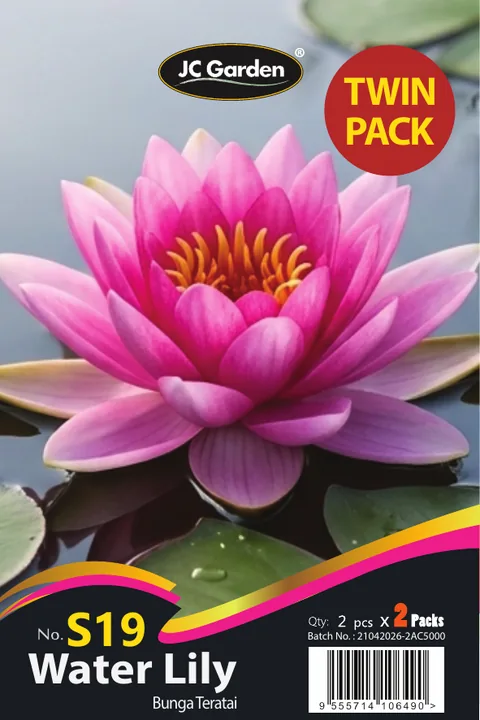
Water Lily Seeds
Tiny water lily seeds for patient growers — sow on mud under shallow water; seedlings are slow but rewarding.
Transplanting seedlings
When a seedling has 3–4 small floating leaves, about 2–3 cm across, lift it gently with the mud around it and plant it into its own small pot of mud. Keep the crown (where the leaves join) just at the soil surface, not buried. Return it to water about 5 cm deep. As it grows, move it into larger pots and deeper water, step by step, until the crown sits about 15–30 cm below the surface in its final container. Moving young plants into deep water too soon is a common cause of failure.
Water level and mosquito control
Keep the water level steady and top up during hot, dry spells with rainwater or tap water that has stood for a day.
Standing water must not breed mosquitoes. In Malaysia this matters for your family and your neighbours, as Aedes mosquitoes carry dengue:
- Fish are the easiest solution. A few guppies (ikan gapi) or other small hardy fish eat mosquito larvae. Add them once seedlings are planted out, as fish can disturb tiny seedlings. Do not overfeed.
- Without fish, flush or change the water at least once a week, since larvae develop into adults in about a week. Overflow the container with a hose, or scoop out larvae with a fine net. For seedling tubs, a fine mesh cover also works.
- Remove dead leaves so the water does not turn stagnant.
- Do not add mosquito sprays or oil to the water.
Feeding
Do not feed seedlings. Once a plant has several full-size leaves, feed about once a month during active growth: wrap a small spoonful of NPK granules in paper or press it into a ball of clay and push it deep into the mud near the roots, away from the crown. Never scatter fertilizer into the water; it feeds algae and can scorch leaves.
Flowering
Each water lily flower usually opens for about three to four days, opening in the morning and closing in the afternoon for day-bloomers, or opening in the evening for night-bloomers. Healthy tropical water lilies produce new buds through most of the year in our climate. Seedlings may not look like their parent, so colours can surprise you.
After a flower finishes, it sinks below the surface. Cut the stalk off near the base with clean shears, unless you want to collect seed, so the plant puts its energy into new buds. For a floating bowl display indoors, cut a flower on its first day of opening.
Common pests and problems in Malaysia
- Aphids. Cluster on leaves and buds. Hose them into the water, where fish will eat them.
- Golden apple snail (siput gondang emas). Eats leaves and young plants; lays pink eggs above the water line. Remove snails and scrape eggs into the water.
- Leaf-cutting caterpillars. Small larvae cut oval pieces from leaves to make floating cases. Remove affected leaves and pick off the cases.
- Yellowing old leaves. Normal. Trim at the base with clean shears.
- Crown rot. The crown turns soft and smelly. Remove rotted parts, replant healthy pieces in fresh mud.
- Algae. Too much open water in full sun or too much nutrient. More leaf cover, less feeding.
FAQ
Why are my water lily seeds not coming up? They may be old or have dried out, the water may be too cold or too dirty, or they may have been buried. Use fresh seed, sow on the surface and keep the water still and warm.
Can I grow water lily on a condo balcony? Yes, if it gets 5–6 hours of direct sun and can take the weight of a water-filled basin. A compact variety in a 40–50 cm container is realistic.
Is it faster to grow from a rhizome? Much faster. A rooted young plant or a rhizome piece can flower within a few months, while seedlings take far longer.
Do water lilies need moving water or a pump? No. They prefer still water. Fountains splashing on the leaves can actually reduce flowering.