
How to Grow Radish (Lobak) in Pots in Malaysia
How to grow radish in Malaysia: small radish in 25–40 days, daikon (lobak putih) in pots. Sowing, thinning, watering, pests and harvest.
- Difficulty
- Easy
- Days to harvest
- 25–40 days
- Updated
- 2026-11-04
Yes — radish grows well in lowland Malaysia and is one of the fastest root crops you can sow. Small round or short red radishes are ready in about 25–40 days, while long white radish (lobak putih, daikon types) needs roughly 50–70 days and a deeper container. The one tip that matters most: thin early and keep watering even. Crowded radishes make leaves but no roots, and radishes that swing between dry and soaked turn woody, hot or split.
Quick facts
| Item | Radish |
|---|---|
| Sun | Full sun to half-day sun; light afternoon shade helps in the hottest months |
| Sowing depth | 1–1.5 cm, sown directly where they will grow |
| Germination | 3–5 days |
| Spacing | Small radish 5 cm apart; daikon 15–20 cm apart |
| Days to harvest | Small radish 25–40 days; daikon about 50–70 days |
| Container | Small radish 15–20 cm deep; daikon 30–40 cm deep |
| Support | None needed |
Choosing a spot and container
Radishes need at least 4–6 hours of direct sun to form a good root. A balcony railing, a terrace-house porch edge or a raised bed in the yard all work. In March–May and other very hot spells, a spot that gets morning sun and some shade after 2 pm keeps the roots crisp and less pungent.
For small radish, any wide container 15–20 cm deep is enough: a styrofoam box, a planter trough or a few polybags. Long white radish needs a deep pot or a tall polybag, 30–40 cm, otherwise the root bends or stops short. Drainage holes are essential — radish roots rot quickly in waterlogged mix after a monsoon downpour.
Soil and potting mix
Roots need loose, crumbly soil they can push through:
- 2 parts potting mix or sieved garden soil
- 1 part well-rotted compost
- 1 part coarse material such as burnt rice husk (sekam bakar), cocopeat or washed sand
Remove stones and clods. Avoid fresh chicken manure and heavy doses of nitrogen fertilizer, which give big leaves, forked roots and a bitter taste. Mix the compost in a week or two before sowing if you can.
How to sow radish step by step
- Moisten the mix. Fill the container to 2 cm below the rim and water it well the day before or an hour before sowing.
- Make furrows or holes. Draw lines about 1–1.5 cm deep, 10–15 cm apart for small radish, or poke holes 15–20 cm apart for daikon.
- Sow. Drop seeds about 2–3 cm apart in the furrow, or 2–3 seeds per hole for daikon.
- Cover and firm. Cover with fine mix and press lightly so the seed touches moist soil.
- Water gently. Use a fine rose on the watering can so the seeds are not washed out. Seedlings usually appear in 3–5 days.
- Sow again later. Sow a short row every 1–2 weeks instead of one big batch. Radishes are best eaten young and do not hold long in the soil.
Radish does not like being transplanted — the taproot is damaged and the plant forms a stunted, forked root. Always sow directly in the final container.
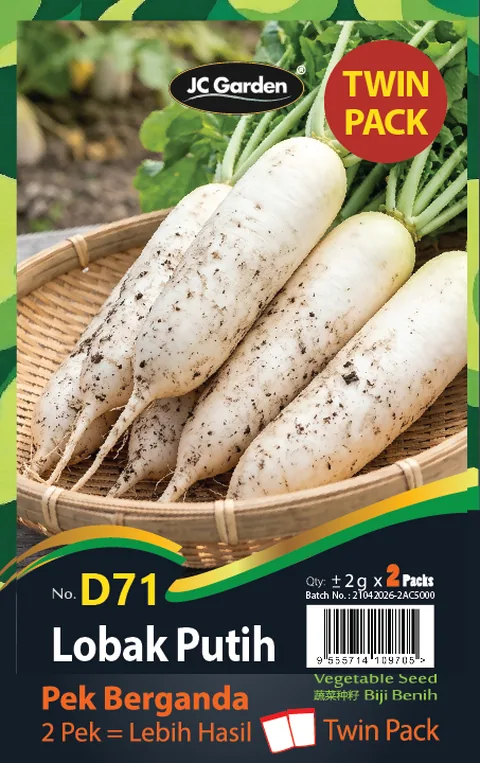
White Radish Seeds
Fast root crop for pots and boxes — small radish is ready in about 25–40 days.
Thinning
Thinning is the step most beginners skip, and it is why many pots of radish never form roots.
- When seedlings have their first true leaves (about 7–10 days), thin small radish to 5 cm apart.
- For daikon, keep the strongest seedling per hole and remove the rest.
- Snip unwanted seedlings with scissors at soil level rather than pulling, so you do not disturb the neighbours.
The thinnings are tender and edible — add them to soup or a salad like microgreens. If you are working out how many seeds to sow per tray or box, the sowing calculator helps:
Watering in hot and rainy weather
- Hot, dry spells: water every morning, and check small containers again in the late afternoon. Dry soil makes radish hot, pithy and fast to flower.
- Rainy season: move containers under the eaves if possible, clear the drainage holes and skip watering when the mix is still damp. A sudden soaking after a dry spell is the main cause of split roots.
- A thin mulch of dried leaves or rice husk keeps soil moisture steadier and stops rain splashing soil onto the leaves.
Feeding
Radish is a short crop and needs very little. Compost in the mix is usually enough for small radish. For daikon, give a light dose of balanced fertilizer about 3 weeks after sowing, following the label rate. Go easy on nitrogen — lush, dark leaves with a thin root mean too much.
Common pests and diseases in Malaysia
- Flea beetles. Tiny black beetles that jump when disturbed and leave the leaves full of pinholes. Young seedlings suffer most. Cover the container with insect netting from sowing, and keep the area free of weeds from the cabbage family.
- Caterpillars (including diamondback moth larvae). Small green caterpillars eating holes in the leaves. Check the undersides of leaves and pick them off; spray neem oil in the evening if numbers build up.
- Aphids. Clusters on the leaves and flower stalks. Hose them off and spray diluted neem oil or mild soapy water.
- Damping off and root rot. Seedlings collapse at soil level, or roots go soft and smelly. Usually caused by wet, poorly drained mix. Improve drainage and do not overwater.
- Split or woody roots. Uneven watering or harvesting too late.
- All leaves, no root. Overcrowding, too little sun or too much nitrogen.
Neem oil is useful against many soft-bodied pests; see the organic pest control guide for more methods:
Harvesting
Pull small radish as soon as the root shoulders are about 2–3 cm across — usually 25–40 days after sowing. Check daily once they start swelling, because a radish left a week too long can go hollow and spongy. Daikon is ready when the visible top of the root is 4–6 cm across, roughly 50–70 days depending on the variety.
Water the container an hour before harvesting so the roots slide out easily. Twist off the leaves, leaving 2 cm of stem, and store the roots in the fridge. Young radish leaves are edible too: stir-fry or add them to soup.
If plants send up a flower stalk before the root has formed, the root will soon turn tough — harvest straight away or replace the plants.
FAQ
Why are my radishes all leaves with no bulb? Most often they were not thinned, or they got too little sun. Thin to the spacing above and move the container to the sunniest spot you have.
Can I grow lobak putih (daikon) on a balcony? Yes, if you give it a container at least 30–40 cm deep. Shorter daikon types suit pots better than very long ones.
Why do my radishes taste very hot? Heat and dry soil make radish more pungent. Water evenly, give some afternoon shade and harvest young.
Can I eat radish microgreens? Yes. Radish is one of the easiest seeds for microgreen trays and is ready in about a week: