
How to Grow Mint (Pudina) at Home in Malaysia
How to grow mint in Malaysia from seed or cuttings: surface sowing, pots, watering in heat and rain, pests, and harvesting pudina for the kitchen.
- Difficulty
- Medium
- Days to harvest
- 60–90 days
- Updated
- 2026-11-04
Yes — mint (pudina) grows well in lowland Malaysia, as long as it gets steady water and some shelter from the harshest afternoon sun. From seed, expect your first small harvest in about 2–3 months. To be honest, though, mint is much easier and faster from cuttings than from seed: a fresh bunch from the market can root in water within a week or two. Seed is worth it when you want many plants or a particular type, and the one tip that matters most is this: mint seed is tiny and needs light to sprout, so press it onto the surface and do not bury it.
Quick facts
| Item | Mint |
|---|---|
| Sun | 4–6 hours of sun; morning sun with afternoon shade is ideal in lowland heat |
| Sowing depth | Surface sow; press in, do not cover (needs light) |
| Germination | 10–20 days; often uneven |
| Spacing | 20–30 cm between plants, or one plant per pot |
| Days to harvest | About 60–90 days from seed; about 3–4 weeks from a rooted cutting |
| Container | Wide rather than deep: at least 25 cm across and 15–20 cm deep |
| Support | None; it spreads sideways by runners |
Seed or cuttings — which should you choose?
Cuttings are the quick route. Buy a fresh bunch of pudina, pick stems that are firm and green, strip the leaves from the bottom 5 cm and stand them in a glass of water in a bright spot out of direct sun. Change the water every day or two. White roots usually appear within 1–2 weeks; plant them once the roots are a few centimetres long.
Seed is slower but gives you many plants at once, free of the pests and diseases that can come in on market stems. Mint seed is very small and germination is often patchy, so sow more than you need. Mint plants grown from seed can also vary a little in leaf shape and scent — that is normal for mint.
Choosing a spot and container
Mint likes moisture more than full blazing sun. On a condo balcony, an east-facing spot or a corner that gets morning sun is perfect. On a west-facing balcony, move it back from the railing so it is shaded after about 1 pm, or it will wilt every afternoon.
Mint spreads by underground runners and will take over a shared planter, so give it its own pot. A wide, fairly shallow container suits it best — a basin-style pot, a trough or a styrofoam box with drainage holes. Tiny pots dry out in one hot afternoon.
Soil and potting mix
Mint wants a rich mix that holds water but still drains:
- 2 parts potting mix or garden soil
- 1 part compost
- 1 part cocopeat to hold moisture
Make sure the pot has drainage holes. Mint loves damp soil, but roots that sit in water during the rainy season will rot.
How to sow mint seed step by step
- Fill a tray or small pot with fine, moist seedling mix and level the surface. Water it before sowing.
- Mix the seed with a pinch of dry sand so you can see where it lands and spread it thinly.
- Sprinkle on the surface. Press gently with your palm so the seed touches the mix. Do not cover it — mint needs light to germinate.
- Cover to keep humid. Put a clear lid, a plastic bag or a sheet of glass over the tray to stop the surface drying. Keep it in bright light but out of direct sun.
- Mist, don't pour. Water with a fine sprayer, or stand the tray in a shallow dish of water so it soaks up from below. A heavy pour washes tiny seed into clumps.
- Be patient. Seedlings usually appear in 10–20 days. Remove the cover once most have sprouted.
- Thin or prick out. When seedlings have 2–3 pairs of true leaves, move small clumps into individual pots.
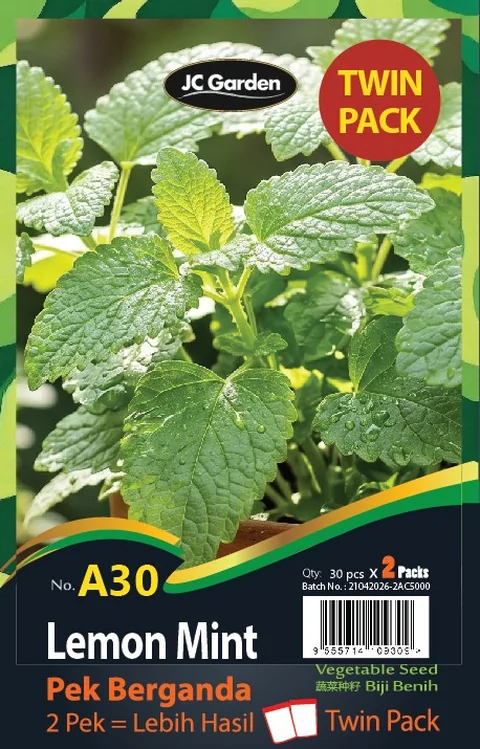
Lemon Mint Seeds
Fresh mint for drinks and cooking — tiny seed sown on the surface; grows best with morning sun.
New to tiny seeds? The seed-starting guide explains trays, mixes and light:
Transplanting and pinching
Move young plants to their final pot when they are about 5–8 cm tall and have a good root ball. Plant at the same depth, water well and keep them in light shade for 2–3 days.
When plants reach about 10–15 cm, pinch off the tip of each stem just above a pair of leaves. This makes the plant branch and become bushy instead of tall and floppy. Keep pinching every couple of weeks.
Watering in hot and rainy weather
- Hot spells: mint is thirsty. Check daily; in a sunny spot you may need to water every morning, and small pots may need a second drink in the late afternoon. A layer of mulch (dry leaves or burnt rice husk) slows drying.
- Rainy season: do not water if the mix is still wet. Clear blocked drainage holes and lift pots on pot feet or bricks so they do not stand in puddles. Yellow, mushy stems at the base are a sign of too much water.
- Water at the base in the morning so leaves dry before night.
Feeding
Mint is grown for its leaves, so it mainly needs nitrogen. Mix compost into the pot at planting, then give a diluted liquid fertilizer every 2 weeks during active growth. Too much fertilizer can make leaves large but less fragrant, so weaker and regular is better than strong and rare. Add a thin layer of compost on top every month or two.
Common pests and diseases in Malaysia
- Spider mites: fine speckling on leaves and tiny webs, worst in hot, dry weather. Spray the undersides of leaves with water regularly; use neem oil in the evening if they persist.
- Aphids and whitefly: small insects clustered on soft tips or under leaves. Wash them off with water, then spray diluted neem oil or mild soap solution.
- Caterpillars: holes in leaves. Check under the leaves and pick them off by hand.
- Mint rust: small orange or brown powdery spots under the leaves. Cut off affected stems, improve airflow and avoid wetting the leaves. Badly affected plants are best replaced with fresh cuttings from a healthy plant.
- Stem rot: stems turn black and collapse at soil level, usually in waterlogged pots. Improve drainage and take cuttings from any healthy tips to start again.
Harvesting
Start picking once the plant is bushy and about 15 cm tall. Cut whole stems just above a pair of leaves — new shoots grow from that point. Take no more than about a third of the plant at once.
Mint flowers in small spikes. Pinch them off as they appear to keep the plant leafy. Every few months, cut the whole plant back to a few centimetres above the soil, feed it, and it will regrow fresh and tender. After a year or so, mint in a pot gets crowded with old runners; lift it, divide it, and replant the youngest pieces in fresh mix.
FAQ
Why does my mint wilt every afternoon? It is usually heat and a small pot drying out. Move it out of the afternoon sun, use a bigger pot and mulch the surface.
Can I grow mint from supermarket or pasar stems? Yes — this is the easiest way. Use fresh, firm stems, strip the lower leaves and root them in water before planting.
Why did hardly any of my mint seeds sprout? The most common reasons are burying the seed too deep, letting the surface dry out, or watering so hard the seed washed away. Surface sow, keep it covered and mist gently.
Can mint grow on a shady balcony? It copes with less sun than most herbs. With 3–4 hours of light it still grows, though stems get longer and leaves smaller.