
How to Grow Chives (Kucai) from Seed in Malaysia
Grow kucai (Chinese garlic chives) and onion chives from seed in Malaysian pots: sowing, watering, feeding, pests and cut-and-come-again harvests.
- Difficulty
- Easy
- Days to harvest
- 70–90 days
- Updated
- 2026-11-04
Yes — chives grow well in lowland Malaysia, especially kucai (Chinese garlic chives), which handles our heat and rain far better than the European onion chives you see in cookbooks. From seed, expect a first light cut in about 10–12 weeks; after that, a healthy clump can be cut again every few weeks for years. The one key tip: be patient in the first two months. Chive seedlings look like thin blades of grass and grow slowly at first — keep them weeded, moist and fed, and do not cut them too early.
Quick facts
| Item | Chives |
|---|---|
| Sun | Full sun to part shade; 4–6 hours of direct light |
| Sowing depth | About 0.5 cm |
| Germination | 7–14 days; use fresh seed |
| Spacing | Clumps of 5–10 seedlings, 15–20 cm apart |
| Days to harvest | First light cut about 70–90 days after sowing; then every 3–4 weeks |
| Container | At least 15–20 cm deep; troughs and long planters are ideal |
| Support | None |
Kucai or onion chives?
Two different plants are both called "chives":
- Kucai / Chinese garlic chives (韭菜) have flat, solid leaves with a mild garlic flavour and white, star-shaped flowers. This is the chive used in Malaysian dumplings, fried kuey teow, omelettes and stir-fries. It is well suited to the tropics and is the easier choice here.
- Onion chives have thin, hollow, tube-like leaves with a mild onion flavour and round purple flowers. They come from cooler climates. In lowland Malaysia they usually grow, but more slowly and with thinner clumps; morning sun with afternoon shade helps.
Both are sown and cared for in the same way, so this guide covers both. Check your seed packet to see which one you have.
Choosing a spot and container
Give chives the brightest spot you can, ideally with some shade from the hottest afternoon sun on a west-facing balcony. With too little light, the leaves become floppy and pale.
Chives grow as clumps and stay in the same pot for a long time, so choose a container that can stay put: a trough, a long planter box, or a few pots about 20 cm across. Depth of 15–20 cm is enough. Make sure there are drainage holes — chive roots rot in soggy soil.
Soil and potting mix
Chives like a rich, loose mix that drains well:
- 2 parts potting mix
- 1 part compost
- 1 part burnt rice husk (sekam bakar) or perlite for drainage
Avoid heavy clay straight from the ground; it stays wet in the rainy season and the bulbs at the base can rot.
How to sow chives step by step
- Use fresh seed. Chive seed loses its ability to germinate faster than most vegetable seed. Sow it soon after buying and store any leftover seed in a sealed container in a cool, dry place.
- Fill the tray or pot with moist seedling mix and level it.
- Sow in pinches. In a seedling tray, drop 5–8 seeds into each cell. In a pot or trough, sow small pinches 15–20 cm apart, or a thin row.
- Cover lightly. Cover with about 0.5 cm of fine mix and press gently.
- Keep moist and shaded. Keep the surface damp but not waterlogged, in bright shade, until seedlings appear in about 7–14 days.
- Move into light. Once sprouts appear, give them morning sun so they do not stretch.
- Do not thin single plants. Chives are grown as small clumps, so leave each pinch of seedlings to grow together.
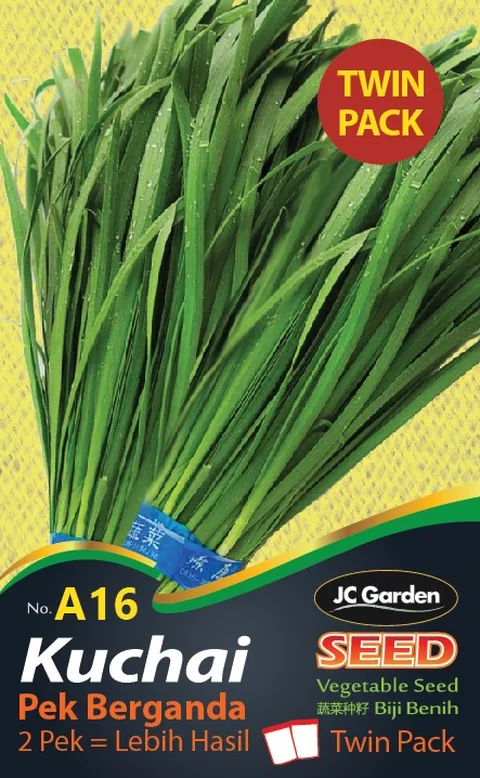
Chinese Chives Seeds
Grow your own kucai in a trough or pot — cut it near the base and it regrows for repeat harvests.
Transplanting
If you started chives in a tray, transplant when seedlings are about 8–10 cm tall, usually 4–6 weeks after sowing. Lift each cell as one clump without pulling the seedlings apart, and plant it at the same depth, 15–20 cm from the next clump. Water well and give light shade for a few days.
You can also grow chives from divisions. A mature clump from a friend's garden can be dug up, split into smaller clumps of several shoots each, and replanted. This is the fastest way to get a large patch.
Watering in hot and rainy weather
- Hot spells: water when the top 2 cm of mix feels dry. In full sun, small pots may need water every day. Mulch the surface with dry leaves or rice husk to slow drying.
- Rainy season: chives dislike sitting wet. Let pots drain fully, clear the drainage holes and lift pots off the floor. If you are on the east coast, move pots under the eaves during long monsoon rains.
- Water at the base in the morning so the leaves dry quickly.
Feeding
Chives are a leaf crop and respond well to regular nitrogen. Mix compost into the pot at planting. Once seedlings are growing well, feed with a diluted liquid fertilizer every 2 weeks. After each harvest, feed again and add a thin layer of compost on top — this is what keeps the clump producing thick, dark green leaves.
Flowers
Garlic chives send up firm flower stalks topped with buds. In Malaysian kitchens these flower stalks are cooked as a vegetable, so pick them while the buds are still closed. If you leave flowers to open and set seed, the plant puts less energy into leaves, and garlic chives can self-seed around the garden. Onion chive flowers are also edible and pretty in salads.
Common pests and diseases in Malaysia
- Thrips: silvery streaks and twisted leaf tips, worse in dry, hot weather. Wash leaves with water and spray neem oil in the evening every 5–7 days.
- Aphids: small insects at the base of the leaves. Hose them off or spray mild soap solution.
- Leaf rust and leaf spot: orange or brown spots on leaves, common in humid weather. Cut affected leaves right down, improve airflow and avoid wetting the leaves.
- Bulb and root rot: yellowing leaves and a soft, smelly base, usually from waterlogging. Improve drainage; replant healthy pieces of the clump in fresh mix.
- Weeds: young chives are easily smothered by grass that looks just like them. Weed little and often by hand.
Harvesting
Wait until the leaves are at least 15–20 cm tall before the first cut. Using clean scissors, cut the whole clump about 3–5 cm above the soil — do not cut lower than that, or the plant regrows slowly. New leaves grow back from the base, ready to cut again in roughly 3–4 weeks.
Every year or two, when the clump gets crowded and the leaves become thin, dig it up, divide it into smaller clumps and replant in fresh mix.
FAQ
Why are my chive seedlings so thin and slow? That is normal in the first 6–8 weeks. Keep them weeded, fed and in good light, and avoid cutting until the leaves are thick and long enough.
Can I grow chives from the kucai I buy at the market? Market kucai is usually cut above the roots, so it will not regrow. Use seed, or ask a friend for a small division of a living clump.
Why are my chive leaves turning yellow at the tips? Common causes are waterlogged soil, too little fertilizer after harvesting, or old leaves that need cutting back. Check drainage first.
Can I grow yellow chives (韭黄) at home? Yellow chives are garlic chives grown without light. Some home growers try covering a cut clump with a dark pot as it regrows, but it takes practice; start with green chives first.