
How to Grow Chinese Cabbage (Napa, Kubis Cina) in Malaysia
How to grow Chinese cabbage (napa, wombok, 大白菜) in lowland Malaysia: heat-tolerant varieties, sowing, spacing, watering, pests and harvesting heads.
- Difficulty
- Medium
- Days to harvest
- 55–70 days
- Updated
- 2026-11-04
Yes — Chinese cabbage (kubis cina, napa or wombok, 大白菜) can be grown in lowland Malaysia, but choose a heat-tolerant tropical variety: the large, tight-headed types sold in markets are mostly grown in the highlands, and many of them will not head properly in our heat. Heat-tolerant varieties usually form a head in about 55–70 days from sowing. The one key tip: Chinese cabbage hates any check in growth. Give it rich soil, steady water, afternoon shade and insect netting, and harvest the moment the head feels firm — a stressed plant bolts, and a mature head left in the rain rots from the inside.
Quick facts
| Item | Chinese cabbage |
|---|---|
| Sun | 4–6 hours; morning sun with afternoon shade in the lowlands |
| Sowing depth | About 0.5 cm |
| Germination | 3–5 days |
| Spacing | 30–40 cm between plants |
| Days to harvest | About 55–70 days from sowing for heat-tolerant varieties |
| Container | At least 25 cm deep, around 15–20 litres per plant |
| Support | None needed; netting cover strongly recommended |
Choosing a spot and container
The best spot is bright but sheltered: morning sun, shade from about 1 pm, and if possible a roof or rain shelter overhead. An east-facing balcony or a covered porch on a terrace house is ideal. Hot western sun makes the leaves wilt every afternoon, which slows growth and triggers early flowering.
Each plant grows into a broad rosette before it folds into a head, so give it room — one plant per large polybag or 15–20 litre pot, or plants 30–40 cm apart in a long planter or raised bed. Always use containers with drainage holes.
Soil and potting mix
Chinese cabbage is a hungry, fast crop. Use:
- 2 parts potting mix or loose garden soil
- 1 part compost or well-rotted manure
- A handful of burnt rice husk or cocopeat for drainage
Aim for soil that is close to neutral. A little garden lime mixed in a week or two before planting helps in acidic soil and also lowers the risk of club root. Use fresh mix rather than soil that grew brassicas last season.
How to sow Chinese cabbage step by step
- Sow in a tray. Fill a seedling tray with fine, moist seed-starting mix.
- Sow 1–2 seeds per cell, about 0.5 cm deep, and cover lightly.
- Keep in bright shade and moist. Seedlings appear in about 3–5 days.
- Give morning sun once they sprout so they stay short and sturdy, and keep the tray under netting.
- Thin to one seedling per cell by snipping the weaker one with scissors, rather than pulling it, so you do not disturb the roots.
- Transplant at 3–4 true leaves, about 2–3 weeks after sowing. Do not keep them in the tray longer — root-bound seedlings often bolt instead of heading.
You can also direct sow 2–3 seeds per spot and thin to the strongest plant.
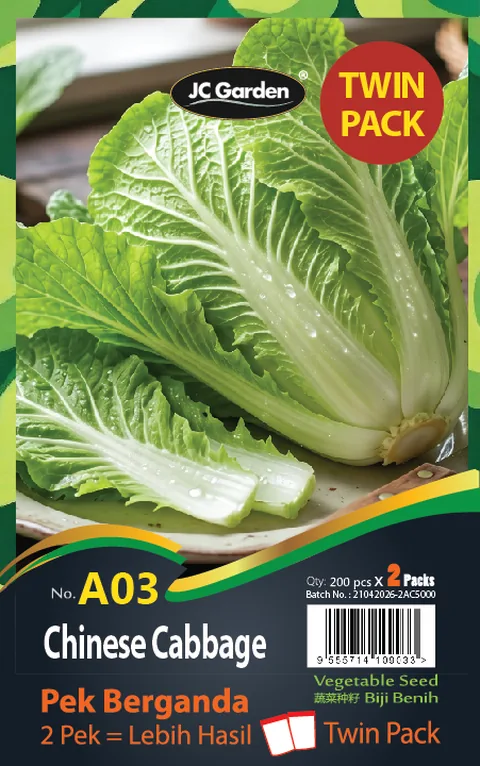
Chinese Cabbage Seeds
Napa-type Chinese cabbage for home gardens — grow in shade-sheltered pots for crisp hearts or tender leaves.
First time raising seedlings? Start here:
Transplanting
Plant out in the late afternoon at the same depth as in the tray, firm gently and water well. Shade the transplants for 2–3 days with a cloth or a piece of shade net. Put the insect netting back over them straight away — young transplants are when flea beetles and diamondback moth do the most damage.
Watering in hot and rainy weather
- Hot spells: Chinese cabbage is mostly water. Water deeply every morning and check again in the late afternoon; a container that dries out even once can cause tipburn (brown, papery leaf edges inside the head) and bolting.
- Rainy weather: this is when heads rot. Keep the plants under a roof or rain shelter if you can, make sure pots drain freely, and avoid watering over the top of the plant. Remove yellow lower leaves that sit on wet soil.
- A mulch of dry leaves or straw keeps soil moisture even and stops mud splashing onto leaves.
Feeding
Mix compost into the planting hole. About two weeks after transplanting, start feeding every 7–10 days with a diluted liquid fertilizer, or scatter a small amount of balanced granular NPK around the edge of the pot every 2–3 weeks and water it in. Keep feeding steady until the head starts to firm up. Too little feed gives a loose, leafy plant; one heavy dose can scorch roots.
Common pests and diseases in Malaysia
- Diamondback moth caterpillars. Small green caterpillars that wriggle and drop on a thread. They chew windows in leaves and burrow into the young heart. Use fine netting, check leaf undersides every few days, hand-pick, and spray neem oil or a Bt (Bacillus thuringiensis) product in the evening if needed.
- Cabbage webworm and cluster caterpillars. Caterpillars that web the growing tip or feed in groups. Look into the centre of the plant, remove webbed clusters by hand and use the same Bt or neem sprays.
- Flea beetles. Tiny jumping black beetles leaving shot holes, most harmful to seedlings. Netting and fast early growth are the best defence.
- Soft rot. The big one for Chinese cabbage. The base or head turns soft, slimy and smells foul, usually after rain or where leaves were damaged. Improve airflow and drainage, keep rain off maturing heads, avoid wounding stems and harvest on time. Remove and bin rotting plants.
- Club root. Plants wilt on hot afternoons and stay small; roots are swollen and lumpy. Remove the whole plant, do not compost it and do not grow brassicas in that soil again — start with fresh mix and lime.
- Downy mildew and leaf spot. Yellow patches on top of the leaf with grey fuzz underneath, or brown spots, in damp weather. Remove affected leaves and space plants wider.
Harvesting
Press the head gently: when it feels firm and full, usually around 55–70 days from sowing, cut the whole plant at soil level with a sharp knife. Do not wait for it to grow bigger in hot or wet weather — a mature head soon splits, rots or sends up a flower stalk. If your plants refuse to head, you have not failed: the loose leaves are just as good to eat. Harvest them young as leafy greens.
FAQ
Why won't my Chinese cabbage form a head? Usually heat, a variety not suited to the tropics, or stress from drying out or late transplanting. Choose a heat-tolerant variety, give afternoon shade and keep water and feeding steady.
What are the brown edges on the leaves inside the head? That is tipburn, caused by uneven watering in hot weather that stops calcium reaching the inner leaves. Water more consistently and mulch the soil.
Is it easier to grow pak choy instead? Yes — pak choy and choy sum are far more forgiving in lowland heat and are ready faster:
When is the best time to sow? It can be sown most of the year, but growth is easiest when nights are a little cooler, around the end and start of the year — as long as you can keep heavy monsoon rain off the plants.