
How to Grow Celery (Daun Sup) at Home in Malaysia
How to grow Chinese leaf celery (daun sup, 芹菜) in Malaysian pots: why the seed needs light, slow germination, watering, pests and repeat harvests.
- Difficulty
- Medium
- Days to harvest
- 60–80 days
- Updated
- 2026-11-04
Yes — but grow the right kind. Chinese leaf celery (daun sup, 芹菜), the thin-stemmed, strongly scented celery used in soups and porridge, grows well in pots in lowland Malaysia. Thick Western stalk celery is a different story: it needs a long, cool season and is very hard to grow well in our heat, so this guide focuses on leaf celery. Expect your first cuttings about 60–80 days from sowing, and then regular harvests for months. The one key tip: celery seed needs light to germinate. Press it onto the surface of moist mix and do not bury it — then be patient, because it can take two to three weeks to sprout.
Quick facts
| Item | Chinese leaf celery (daun sup) |
|---|---|
| Sun | 3–5 hours; morning sun with afternoon shade is ideal |
| Sowing depth | Surface sow — press in, do not cover (needs light) |
| Germination | 10–21 days; soaking seed overnight helps |
| Spacing | 15–20 cm between plants, or clumps of 2–3 plants 20 cm apart |
| Days to harvest | About 60–80 days from sowing for first cuttings |
| Container | At least 15–20 cm deep; troughs and medium pots work well |
| Support | None needed |
Leaf celery vs Western celery
- Chinese leaf celery (daun sup / 芹菜): thin, hollow stems, lots of leaves, strong flavour. Grows in lowland heat and part shade, and can be cut again and again. This is the one to grow.
- Western stalk celery (西芹): thick, solid stalks. Needs months of cool weather and constant water to form good stalks. In the lowlands it usually stays thin, stringy and bitter, or bolts. Highland gardeners have a better chance.
Spot and container
Leaf celery prefers gentle light. An east-facing balcony, a porch with morning sun, or a spot under light shade netting is ideal. Hot afternoon sun makes the leaves yellow and tough and pushes the plant into flowering. With only 3–4 hours of light it still grows, just more slowly.
Use troughs, planter boxes or pots at least 15–20 cm deep with drainage holes. Celery is thirsty, so avoid very small pots that dry out in a few hours. A long planter of leaf celery beside coriander and spring onions makes a handy soup corner.
Soil and potting mix
Celery likes a rich, moisture-holding but airy mix:
- 2 parts potting mix
- 1 part compost
- 1 part cocopeat, plus a handful of burnt rice husk for drainage
Avoid heavy clay that stays soggy after rain; celery roots rot in waterlogged soil.
How to sow celery step by step
- Soak the seed in water for a few hours or overnight. Celery seed is tiny and slow; soaking helps it start.
- Fill a tray or small pot with fine, moist seed-starting mix and level the surface.
- Scatter seed thinly on the surface. Mixing the tiny seeds with a little dry sand makes them easier to spread.
- Press gently, do not cover. The seed needs light to germinate. At most, add a very thin dusting of fine mix you can still see the seed through.
- Keep the surface constantly moist. Mist with a spray bottle and cover the tray with a clear lid or plastic bag in a bright, shaded spot — never in direct sun, which would cook it.
- Wait. Seedlings appear in about 10–21 days. Remove the cover once most have sprouted.
- Give gentle morning sun so seedlings do not stretch.
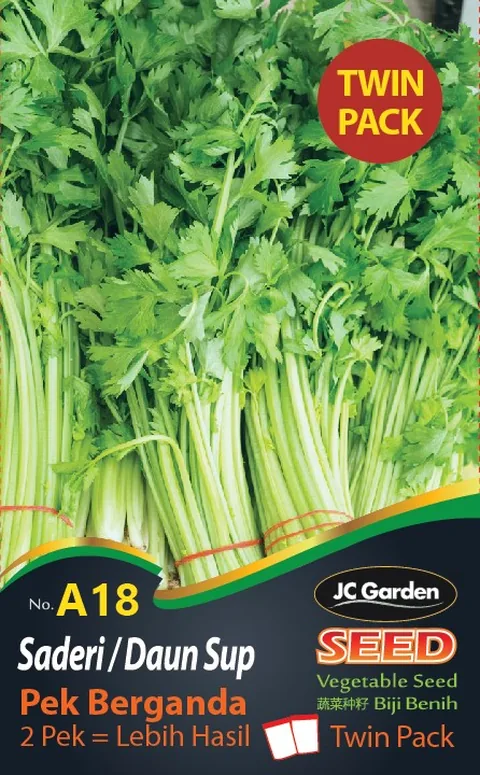
Chinese Celery Seeds
Fragrant Chinese leaf celery for soups — grows in part shade and can be cut again and again.
More on seeds that need light, and those that don't:
Thinning and transplanting
Celery seedlings grow slowly at first. When they have 3–4 true leaves, usually 4–6 weeks after sowing, transplant them into their final container 15–20 cm apart, or as small clumps of 2–3 seedlings 20 cm apart (common for daun sup). Plant at the same depth — do not bury the crown — water in and shade for a few days.
Watering in hot and rainy weather
- Hot weather: celery is a moisture lover. Water every morning and check again in the late afternoon. Dry spells make the stems stringy and the leaves bitter.
- Rainy season: keep drainage holes clear and lift pots off the ground. Celery likes moisture but not waterlogging; soggy roots lead to crown rot.
- A mulch of cocopeat or dry leaves keeps the surface from drying out.
Feeding
Celery is a leaf crop that grows for a long time, so feed little and often. Start a liquid fertilizer at half strength once transplants settle, then feed every 7–10 days at the dilution on the label. Add a thin layer of compost to the surface every month or after a big harvest.
Common pests and diseases in Malaysia
- Aphids. Clusters on the new centre leaves. Hose off and spray neem oil or a mild soap solution.
- Leaf miners. Wiggly pale trails inside the leaves. Pick off affected leaves early and bin them.
- Whiteflies. Tiny white insects flying up when you brush the plant. Yellow sticky traps and neem sprays help.
- Caterpillars. Occasional leaf damage; pick them off by hand.
- Snails and slugs. Love young celery after rain. Hand-pick at night.
- Leaf spot (blight). Brown or yellow spots spreading on older leaves in wet weather. Remove spotted leaves, water the soil not the leaves, and keep plants well spaced.
- Damping off. Seedlings collapse at the base. Use fresh seed-starting mix, avoid overwatering and give some airflow once seedlings are up.
Harvesting
Start harvesting when plants are about 20–25 cm tall. Cut the outer stems near the base with clean scissors and leave the centre to keep growing. Take no more than a third of the plant at a time. With regular feeding, one planting can be cut for several months. When a flower stalk appears, the leaves turn bitter — harvest heavily, then pull the plant and resow.
FAQ
Why won't my celery seeds germinate? Usually they were buried too deep, dried out, or you gave up too early. Sow on the surface, keep it moist under a clear cover and wait up to three weeks.
Can I grow Western celery in Kuala Lumpur or Johor Bahru? You can try, but it usually stays thin and bitter in lowland heat. Leaf celery gives far better results.
Can I replant celery from the market? Daun sup bought with roots attached will sometimes re-root if planted in moist mix and kept shaded for a week. Seed is more reliable.
What grows well with celery? Other soup and garnish herbs with similar needs, such as coriander and lettuce: