
How to Grow Catnip from Seed in Malaysia (Pots, Shade and Drainage)
How to grow catnip in Malaysia: chilling and sowing the tiny seeds, shade and drainage in lowland heat, watering, pests and picking leaves for your cat.
- Difficulty
- Harder
- Days to harvest
- 60–80 days
- Updated
- 2026-11-05
Yes, you can grow catnip in lowland Malaysia, but be ready for a challenge. Catnip (Nepeta cataria) is a mint-family herb from cooler climates, so our steady heat, humidity and heavy rain stress it far more than they stress local herbs. With the right setup you can pick leaves from about 60–80 days after sowing. The one tip that matters most: keep it in bright shade with sharp drainage, because hot afternoon sun and soggy roots cause most losses. In the highlands it grows much more easily.
Quick facts
| Item | Catnip |
|---|---|
| Sun | Morning sun or bright shade; protect from hot afternoon sun |
| Sowing depth | Surface sow; press in and cover very lightly |
| Germination | About 7–14 days, sometimes up to 3 weeks |
| Spacing | Thin to about 5 cm in the tray; 30–40 cm between plants |
| Days to harvest | Leaves from about 60–80 days |
| Container | 20–25 cm pot per plant, with plenty of drainage holes |
| Support | Not needed |
What to expect in lowland heat
Catnip prefers temperatures of roughly 15–30°C, and our afternoons often go past that. In a typical lowland garden it grows more slowly than in a cool climate, can collapse during long wet spells, and is often short-lived. Many growers treat it as a pot herb to replace after some months, and resow every few months to stay supplied.
Choosing a spot and container
Pick a place with morning sun and bright, open shade after midday, such as an east-facing balcony or a spot under a light shade net. Under a roof overhang is ideal because it keeps the worst rain off. Avoid hot west-facing walls and closed, airless corners.
Grow catnip in a pot rather than in the ground. A pot lets you move the plant into shade on hot days and under shelter when it rains for days on end. Use a 20–25 cm pot with several drainage holes and raise it on pot feet or bricks so water never sits underneath.
Plan for cats from the start. Many cats are attracted to catnip and will roll on it, chew it and flatten young plants. Grow seedlings out of reach, on a high shelf or inside a simple wire-mesh cage, until the plant is bushy enough to cope.
Soil and potting mix
Drainage is everything. A good mix is:
- 2 parts potting mix
- 1 part perlite, coarse sand or burnt rice husk (sekam bakar)
- A small handful of compost
Do not use heavy garden soil on its own; it stays wet after rain and the roots rot. Very rich mix gives soft, floppy growth that collapses in the heat.
How to sow catnip step by step
- Chill the seeds. Put the seed packet in a sealed bag in the fridge (not the freezer) for about a week. This cold spell helps the seeds wake up more evenly.
- Soak briefly. Soak the seeds in room-temperature water for a few hours just before sowing.
- Prepare a tray. Fill a seedling tray or small pots with fine, gritty seedling mix and water it well.
- Surface sow. The seeds are tiny. Sprinkle them thinly on the surface and press them in with your fingertip. Cover with only a dusting of fine mix; they germinate better with some light.
- Keep moist and shaded. Mist gently and keep the tray in bright shade, out of direct sun and rain. A clear lid helps, but open it daily for air.
- Be patient. Seedlings usually appear in 7–14 days, but some take up to 3 weeks. Do not throw the tray out early.
- Thin. When seedlings have their first true leaves, thin to about 5 cm apart by snipping extras at soil level.
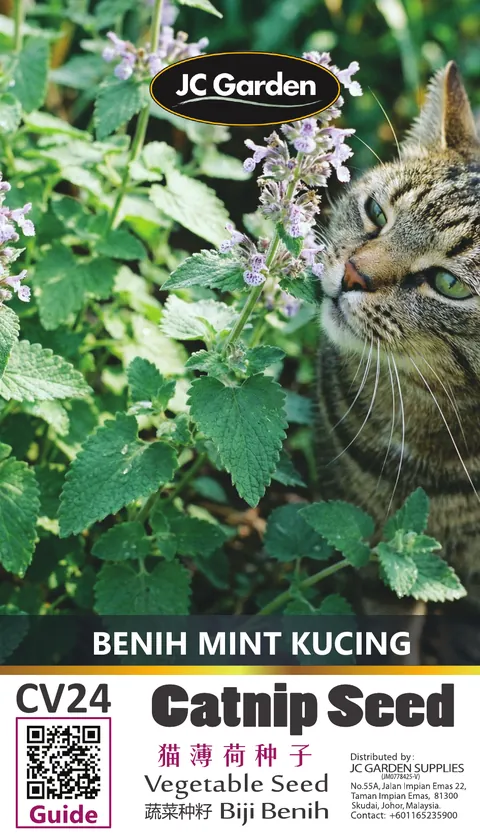
Catnip Seeds
Soft grey-green mint relative that many cats love — a fun pot herb that needs shade in lowland heat.
More on trays, mixes and damping-off:
Transplanting
Move each seedling to its own 20–25 cm pot when it has about 4 true leaves. Do it in the late afternoon, water well, and keep it in shade for a few days. In a long planter, space plants 30–40 cm apart.
Once a plant reaches about 15–20 cm, pinch off the growing tips. It branches out and becomes bushier and sturdier.
Watering in hot and rainy weather
- Hot, dry spells: check the pot every morning. Water when the top 2–3 cm of mix feels dry. On very hot afternoons, move the pot deeper into shade rather than watering more.
- Rainy season: this is the dangerous time. Move pots under shelter, skip watering while the mix is still damp, and make sure saucers are empty.
- Water at the base in the morning. Wet leaves overnight in humid air invite rot and leaf spots.
To work out a sensible routine for your pot size and spot:
Feeding
Catnip needs very little: a light, diluted feed about once a month while it grows. Too much fertilizer, especially nitrogen, makes soft leaves that wilt in the heat and attract aphids.
Common problems and pests in Malaysia
- Root and stem rot. The plant suddenly wilts and the base turns dark and soft. This is the most common cause of loss. Improve drainage, keep it out of the rain and water less; rotted plants rarely recover, so resow.
- Heat collapse. Leaves droop at midday and lower leaves yellow. Give more shade in the afternoon.
- Aphids and whitefly. Small insects under leaves and on tips. Rinse them off with water or spray with diluted neem oil or a mild soap solution in the evening.
- Spider mites. Fine yellow speckles on leaves in hot, dry weather. Spray the undersides with water.
- Leggy, thin plants. Too little light. Move to a spot with more morning sun.
More organic fixes are in the pest control guide:
Harvesting and using the leaves
Start picking once the plant is bushy, from about 60–80 days. Snip stem tips just above a pair of leaves; new shoots grow from there. Never strip more than about a third of the plant at once.
Many cats are attracted to fresh or dried leaves, though not every cat reacts. Offer a leaf, or dry a few stems in a shaded, airy spot and tuck the dried leaves into a toy. Catnip is also traditionally brewed as a mild herbal tea. This guide is about growing the plant; it is not medical advice.
Cut back the small white to pale lilac flower spikes after flowering to keep the plant leafy.
FAQ
Why do my catnip seedlings keep dying? Usually too much water, too much heat, or damping-off in a crowded tray. Use a gritty mix, sow thinly, and keep seedlings in bright shade with good airflow.
Can I grow catnip in full sun in Malaysia? In the lowlands, full afternoon sun usually scorches and weakens it. Morning sun plus afternoon shade works far better.
Is catnip the same as mint? It is a relative in the same family with a similar look, but a different plant. For a mint that copes better with our weather: