
How to Grow Winged Bean (Kacang Botol) at Home in Malaysia
How to grow winged bean (kacang botol) in Malaysia — soaking hard seeds, trellis, light feeding, pod borer and false rust control, and picking pods young.
- Difficulty
- Easy
- Days to harvest
- 70–90 days
- Updated
- 2026-11-04
Yes — winged bean (kacang botol) is a true tropical crop and one of the easiest climbing beans for lowland Malaysia. It handles heat, humidity and rain well, and usually gives its first pods about 70–90 days after sowing, then keeps cropping for months. Almost the whole plant is edible: pods, young leaves, shoots and flowers. The one key tip: pick the pods young and flat, when they snap cleanly — older pods turn tough and stringy within days.
Quick facts
| Item | Winged bean (kacang botol) |
|---|---|
| Sun | Full sun, 6 hours or more |
| Sowing depth | 2–3 cm; soak seeds overnight first |
| Germination | 5–10 days |
| Spacing | 45–60 cm between plants along a trellis |
| Days to harvest | About 70–90 days from sowing to first pods |
| Container | At least 20–30 L per plant, 30–40 cm deep |
| Support | Yes — a trellis, net or fence about 2 m high |
Choosing a spot and container
Winged bean is a twining climber that can reach 3 m or more. Give it a sunny fence, a bamboo A-frame, or netting tied up to a balcony ceiling. It produces best in full sun, though it tolerates a little afternoon shade.
Use a 20–30 L pot or polybag per plant, or a long planter with plants 45–60 cm apart. Remember that a large pot full of wet soil is heavy on a balcony:
Soil and potting mix
Like other beans, winged bean makes some of its own nitrogen with the help of bacteria in small nodules on its roots, so it does not need very rich soil. A loose, well-drained mix works best:
- 2 parts garden soil or potting mix
- 1 part compost
- 1 part burnt rice husk (sekam bakar) or cocopeat
Avoid adding lots of manure or nitrogen fertilizer, which makes a leafy vine with fewer pods.
How to sow winged bean step by step
- Soak the seeds overnight (8–12 hours) in room-temperature water. Winged bean seeds have a hard coat. Seeds that have not swollen can be nicked carefully on the edge of the coat with a nail clipper, away from the small scar (the "eye") where the root emerges.
- Sow 2 seeds per spot about 2–3 cm deep, directly in the pot or bed. Beans do not like being transplanted much, so direct sowing is easiest.
- Keep the mix moist but not soggy. Seedlings usually appear in 5–10 days.
- Thin to the strongest seedling by snipping the other at soil level.
- Guide the shoot onto the trellis as soon as it starts to twine.
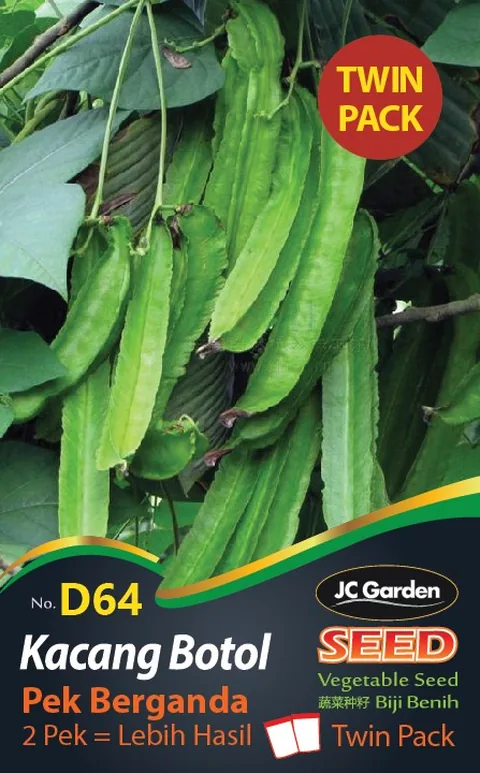
Winged Bean Seeds
Tropical climbing bean that loves heat and rain — pods, leaves, shoots and flowers are all edible.
Trellising and pruning
Set the trellis up before or right after sowing so you do not damage roots later. Winged bean twines around strings, poles and netting by itself once started.
- When the vine reaches the top of the trellis, pinch the growing tip to encourage side shoots, which carry more flowers.
- Pinch some shoot tips for the kitchen — this also keeps the vine bushier.
- Remove old yellow leaves at the bottom to improve airflow.
Some winged bean varieties are sensitive to day length and spend a long time growing leaves before they flower. With Malaysia's steady, roughly 12-hour days, most varieties sold locally flower without trouble — just be patient if your vine takes a while.
Watering in hot and rainy weather
Keep the soil evenly moist. In hot, dry spells, water deeply every morning; large pots may need a second check in the late afternoon. Mulch with straw or dried leaves.
Winged bean tolerates rain well, but roots still rot in waterlogged pots. In wet weeks, skip watering when the soil is wet and make sure drainage holes stay clear. Very dry soil during flowering makes flowers drop.
Feeding
- Mix compost into the soil at planting.
- Once flowering starts, feed a fertilizer with more potassium (K) than nitrogen (N) every 2–3 weeks, or a diluted liquid fertilizer every 10–14 days.
- Add a thin layer of compost monthly. Go easy on nitrogen — lush leaves and few pods is the usual sign of overfeeding.
Flowering and pollination
Winged bean has pretty pale blue to purple pea-like flowers. They are self-pollinating, so you do not need to hand-pollinate. Bees visit them too, which does no harm. Pods start forming soon after the flowers fade.
Common pests and diseases in Malaysia
- Pod borers: caterpillars that bore into flowers and young pods, leaving holes and frass. Remove damaged flowers and pods, and spray neem oil in the evening on flowers and young pods.
- Aphids: black or green clusters on shoot tips and young pods. Wash them off with water and spray neem oil or a mild soap solution. Ants farming the aphids are a sign to look closer.
- Spider mites and thrips: pale speckled or crinkled leaves, worse in dry spells. Wash leaf undersides and spray neem oil every 5–7 days.
- False rust: orange, powdery, raised spots and swellings on leaves, stems and pods, a known winged bean disease in Southeast Asia that spreads in wet weather. Remove and bin affected parts early, keep the vine airy, and do not save seed from infected plants.
- Root-knot nematodes: stunted plants with lumpy, swollen roots. Beneficial nitrogen nodules are small, round and easy to pop off; nematode galls are part of the root itself. Use fresh potting mix and rotate where you plant.
More organic methods:
Harvesting
Pick pods young, usually when they are about 15–20 cm long and still flat, bright green and snap easily — often around two weeks after the flower opens. Check every two or three days, because pods toughen fast. Regular picking keeps the vine flowering.
Other edible parts:
- Young leaves and shoot tips: cook like spinach.
- Flowers: add to salads or stir-fries.
- Mature dry seeds: must be cooked thoroughly before eating, like other dried beans.
- Roots: plants grown in the ground for a long season can form edible tuberous roots, though pot-grown plants seldom give much.
FAQ
My winged bean is all leaves and no flowers. Why?
Too much nitrogen, too little sun, or a variety that is slow to flower. Stop nitrogen feeding, move it to more sun if you can, and give it time.
Why are my pods tough?
They were picked too late. Harvest at 15–20 cm, while they still snap cleanly.
Can I grow winged bean on a balcony?
Yes. One or two plants in large pots with netting to the ceiling can keep a small family supplied, as long as there is at least 6 hours of sun.
Related guides: