
How to Grow Roselle (Rosel) from Seed in Malaysia
How to grow roselle (rosel) in Malaysia: sowing, big pots, pinching, short-day flowering, mealybugs and harvesting red calyces for drinks and jam.
- Difficulty
- Easy
- Days to harvest
- 110–140 days
- Updated
- 2026-11-05
Yes, roselle (Hibiscus sabdariffa, rosel, asam susur) grows very well in lowland Malaysia. It is grown for the fleshy red calyces around each seed pod, traditionally used for drinks, cordial and jam. From seed the first calyces usually come about 110–140 days after sowing, then keep coming for several weeks. The one tip that matters most: give it space and full sun. A cramped, shaded roselle grows tall and leafy with few flowers.
Quick facts
| Item | Roselle |
|---|---|
| Sun | Full sun, at least 6 hours |
| Sowing | 1–2 cm deep, in polybags or direct |
| Germination | 4–7 days |
| Spacing | 60–90 cm between plants |
| Days to harvest | First calyces about 110–140 days after sowing |
| Container | At least 40 cm wide and deep (about 40–50 litres) per plant |
| Support | Usually none; a stake in windy spots |
| Temperature | Germinates best at 25–32°C; grows at 22–35°C |
Flowering: a short-day plant
Roselle is a short-day plant: it switches from leaves to flowers when days are around 12 hours or shorter. Far from the equator it only flowers in autumn, however early you sow it.
Malaysia's day length stays near 12 hours all year, so here roselle flowers once the plant is mature, usually 3–4 months after sowing, in whatever month you sow. In the northern states plants may flower a little more heavily towards the end of the year, when days are slightly shorter. Two practical points:
- Avoid bright night lights. A plant right under a porch light or street lamp may be slow to flower.
- Plan around the rain. Calyces can rot in long wet spells, so a main harvest in drier months is easier, though you can sow year-round.
Choosing a spot and container
Roselle becomes a branching shrub 1–2 m tall, so it suits a sunny yard or roof terrace. A condo balcony works only with 6 hours of direct sun and room for one big pot (at least 40 cm wide and deep, about 40–50 litres). Wet soil is heavy, so check the load first:
In the ground, space plants 60–90 cm apart so air can move between them.
Soil and potting mix
Roselle is not fussy, but it needs good drainage:
- 2 parts garden soil
- 1 part compost
- 1 part burnt rice husk (sekam bakar) or coarse sand
Waterlogged soil causes root and stem rot; if your yard floods, plant on a raised mound.
How to sow roselle step by step
- Prepare polybags. Fill small polybags or pots (about 10–15 cm) with moist mix. You can also sow directly where the plant will grow.
- Sow. Push 2 seeds per bag, 1–2 cm deep. Soaking the seeds in water for a few hours first is optional but helps them start evenly.
- Cover and water. Cover, firm gently, and keep moist but not soggy.
- Watch for seedlings. They usually appear in 4–7 days.
- Thin. Keep the strongest seedling in each bag.
- Transplant. When seedlings are about 15 cm tall, move them into their final pot or bed, 60–90 cm apart. Do this in the evening and water well.
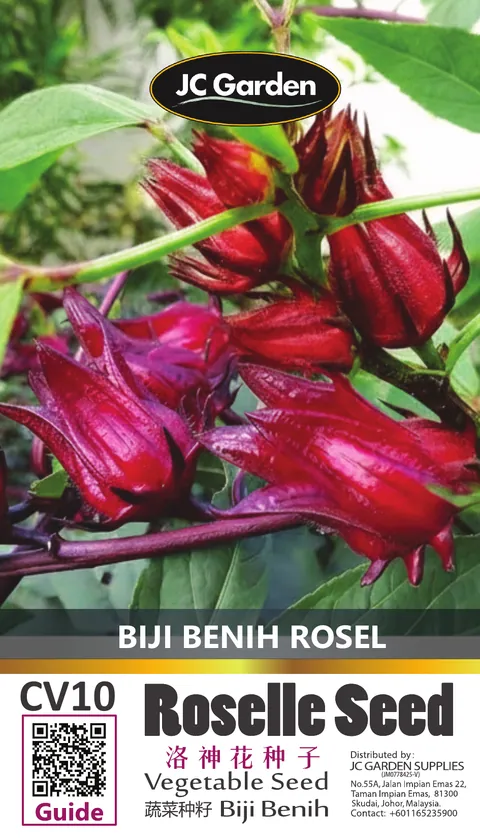
Roselle Seeds
Sturdy shrub with ruby-red calyces, traditionally used for tea, drinks and jam. Loves heat.
Pinching and support
At about 40 cm tall, pinch out the growing tip once. More branches mean more flowers; pinching too often delays flowering. In a windy spot, tie the main stem loosely to a stake.
Watering in hot and rainy weather
- Hot, dry spells: water deeply 2–3 times a week in the ground, more often in pots, and mulch. Drought during flowering makes flowers drop.
- Rainy season: stop watering when the soil is wet, and make sure water drains away fast.
- Water at the base in the morning rather than over the leaves.
Feeding
- Mix compost into the planting hole.
- From week 3, give a light balanced fertilizer.
- Once flower buds appear, switch to a potassium-rich feed every 2 weeks to support flowers and calyces.
Too much nitrogen gives a huge, leafy bush with few flowers.
Common problems and pests in Malaysia
- Mealybugs. White cottony clusters on stems, buds and leaf undersides, often with ants running around them. This is the main roselle pest, especially in dry weather. Wipe or hose them off early, then spray neem oil or a mild soap solution every few days. Control the ants too, because they protect the mealybugs.
- Aphids. Clusters on soft tips. Hose off or spray mild soap.
- Flea beetles and caterpillars. Small holes in the leaves. Hand-pick; light damage is outgrown.
- Root and stem rot. Sudden wilting with a dark stem base, from waterlogging. Improve drainage; badly affected plants rarely recover.
- Root-knot nematodes. Stunted plants with lumpy roots in old soil. Use fresh mix and plenty of compost.
Harvesting
Flowers are pale yellow or pink with a dark centre and last only one day. After the petals fall, the red calyx swells around the green seed pod.
- Pick calyces about 10–20 days after the flower opens, while they are plump, bright red and crisp. Snap or cut them off at the base.
- Pick every few days; regular picking encourages more flowers.
- To remove the seed pod, cut off the base and push the pod out, or use a small metal tube or apple corer.
- Use calyces fresh, or dry them in the shade and store in an airtight jar. They are traditionally used for drinks, cordial and jam. The sour young leaves are used in cooking in some countries.
This guide is about growing the plant; it is not medical advice.
Saving seed
Leave a few calyces until the pod turns brown and dry, then collect, shade-dry and store the seeds somewhere cool and dry. The plant declines after a few months of fruiting; then sow a fresh batch.
FAQ
My roselle is tall but has no flowers. Why? Too young, too shady, too much nitrogen, or a night light nearby. Give full sun, a potassium-rich feed, and time.
Can I grow roselle in a pot? Yes, in a big one, at least 40 cm wide and deep, in full sun.
What else suits the same sunny spot? Okra is a cousin of roselle and likes the same heat, and lemongrass is another easy plant traditionally used for home-made drinks: