
How to Grow Papaya from Seed in Malaysia
How to grow papaya from seed in Malaysia: sowing in polybags, male, female and hermaphrodite plants, planting on a mound, feeding, pests and harvest.
- Difficulty
- Medium
- Days to harvest
- 240–300 days
- Updated
- 2026-11-05
Yes — papaya (betik) grows very well in lowland Malaysia. It loves heat and strong sun, and a seedling can become a fruiting tree in about 8–10 months. Two things decide success: plant on a raised mound so rain never pools around the trunk, and plant a few seedlings per spot, because you cannot tell male, female and hermaphrodite plants apart until they flower.
Quick facts
| Item | Papaya |
|---|---|
| Sun | Full sun, 6 hours or more; a warm spot sheltered from strong wind |
| Sowing | 1 cm deep, 2–3 seeds per polybag |
| Germination | Usually 10–21 days |
| Temperature | Sow 25–35°C; grows best 22–35°C |
| Spacing | 2–2.5 m between planting spots |
| First flowers | About 3–4 months after sowing |
| First fruit | About 8–10 months after sowing |
| Container | Possible in a very large pot (60 litres or more), but ground planting is far better |
| Support | No trellis; a stake helps young trees in windy spots |
Male, female and hermaphrodite plants
Papaya plants grown from seed come in three types:
- Male plants have long, dangling stalks carrying many small flowers. They usually do not fruit, or give only a few small fruits.
- Female plants have larger single flowers sitting close to the trunk, and produce rounder fruit. They need pollen from a male or hermaphrodite plant nearby, otherwise fruit may not develop properly.
- Hermaphrodite plants have flowers with both parts, pollinate themselves and usually give longer, pear-shaped fruit. Most home growers want these.
Because you only find out at flowering, plant 2–3 seedlings together in each spot. When they flower, keep the best fruiting plant and remove the rest.
Choosing a spot
Papaya needs the sunniest, best-drained place you have — a corner of a terrace-house yard, a side garden or a fence line. Keep it about 2 m away from walls, drains and pipes, and away from low spots where rainwater collects.
In a pot? A papaya can live in a large container (at least 60 litres, wide and stable) on a sunny porch, but expect a smaller tree, fewer fruits and more frequent watering. On a condo balcony, check the weight first:
Soil
Papaya roots rot quickly in wet, airless soil. In the ground, build a mound or raised bed about 30 cm high and 1 m wide. Mix in:
- Plenty of compost or well-rotted manure
- Burnt rice husk (sekam bakar) or coarse sand if your soil is heavy clay
In pots, use a loose, free-draining potting mix with about one third compost.
How to sow papaya step by step
- Prepare seeds. If the seeds still have their jelly-like coating, rub it off and rinse. Dry seeds can be soaked in water overnight.
- Fill polybags. Use small polybags or pots with moist seedling mix. Papaya does not like its roots disturbed, so avoid sowing in a crowded tray.
- Sow. Press 2–3 seeds per polybag about 1 cm deep and cover.
- Keep warm and moist. Keep in a bright spot out of heavy rain; damp, not soggy.
- Wait patiently. Seedlings usually appear in 10–21 days, sometimes unevenly.
- Grow on. Keep the seedlings in their polybags in good light until they are 15–20 cm tall.
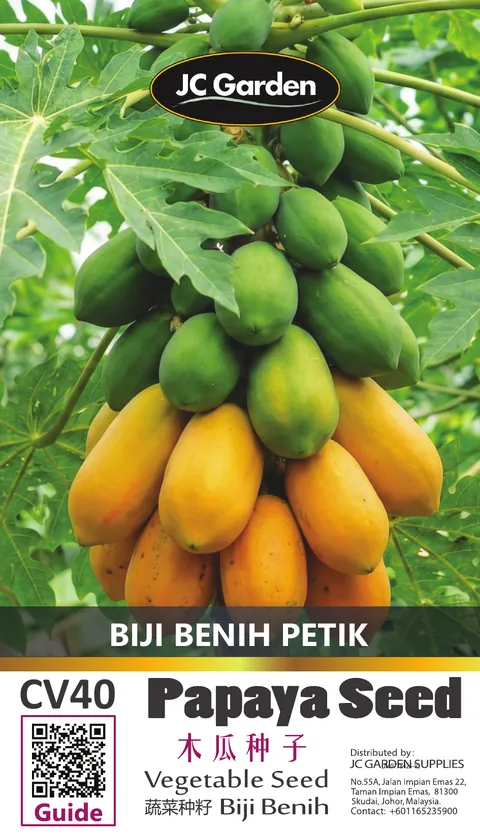
Papaya Seeds
Grow your own papaya tree from seed — fast-growing and well suited to Malaysia's warm, sunny lowlands.
Transplanting
At 15–20 cm tall, plant out on your prepared mound. Cut the polybag away instead of pulling the plant out, so the root ball stays intact. Plant 2–3 seedlings in each spot, about 30 cm apart, with 2–2.5 m to the next group. Water well, and give light shade for a few days if the sun is fierce.
When the plants flower at around 3–4 months, keep one fruiting plant (hermaphrodite, or a female with a pollinating plant nearby) per spot and cut out the extras.
Watering in hot and rainy weather
- Dry spells: water deeply 2–3 times a week in the ground, daily for pots. Mulch with dry leaves or grass clippings, kept a hand's width away from the trunk.
- Rainy season: do not water if the soil is wet. Check that water drains away from the mound after storms. Yellowing lower leaves and a soft base of the trunk are warning signs of root rot.
Feeding
Papaya grows fast and needs regular food. Add a layer of compost or a balanced fertilizer once a month, spread in a ring around the plant rather than against the trunk. Once flowering and fruiting start, a fertilizer with more potassium supports fruit. Too much nitrogen gives a tall, leafy tree with fewer fruits.
Common pests and problems in Malaysia
- Root and stem rot. The most common killer, caused by waterlogging. Prevention is everything: mound planting and good drainage.
- Papaya dieback. A bacterial disease that causes water-soaked patches on leaves and stems, leaf collapse and rotting crowns. Cut out and destroy badly affected plants promptly, and do not move infected material around the garden.
- Ringspot virus. Mottled, distorted leaves and ring-shaped marks on fruit, spread by aphids. There is no cure; remove infected plants and control aphids.
- Mealybugs. White, cottony clusters on leaves and fruit. Wipe or spray with water, then neem oil or a mild soap solution.
- Mites. Yellow speckling on leaves in hot, dry weather. Spray the undersides of leaves with water.
- Fruit flies. Wrap fruit in paper bags or harvest at first colour.
Harvesting
Papayas are ready when the skin begins to show yellow streaks. Cut with a short stalk and let them finish ripening indoors at room temperature, which also keeps them away from birds and fruit flies. Green papaya is also used in cooking. Fresh papaya sap can irritate skin, so wear gloves when cutting.
A papaya tree fruits for a few years, but it becomes very tall and harder to harvest. Many growers sow a new batch every 2–3 years to replace old trees.
FAQ
Why does my papaya tree flower but never fruit? It is probably a male plant. Keep a hermaphrodite or female plant instead; a single male nearby can still help pollinate female trees.
Can I grow papaya on a condo balcony? It is possible in a very large pot with full sun, but the tree is big and heavy. A terrace-house yard or ground plot gives much better results.
Why are my young plants yellowing and wilting after rain? Usually wet roots. Improve drainage, raise the soil level and stop watering until the soil dries a little.