
How to Grow Dahlia from Seed in Malaysia (Lowland Pots)
How to grow dahlia from seed in lowland Malaysia: dwarf bedding types, sowing, rain shelter, feeding, pests and deadheading for pots and balconies.
- Difficulty
- Harder
- Days to harvest
- 90–120 days
- Updated
- 2026-11-04
Yes, but with honest expectations. Dahlias come from the cool highlands of Mexico, and in Malaysia they are happiest in places like Cameron Highlands. In hot, wet lowland gardens they can still flower well in pots if you grow them from seed as a short-lived annual: dwarf bedding dahlias usually start flowering about 3–4 months after sowing and keep going for a few months. The one tip that matters most: keep them out of heavy rain and waterlogged soil. Dahlias tolerate heat far better than they tolerate wet roots, and the tubers that form underneath rot easily in soggy lowland soil.
Quick facts
| Item | Dahlia (dwarf bedding types from seed) |
|---|---|
| Sun | Full morning sun, 5–6 hours; light shade in the hot afternoon helps in the lowlands |
| Sowing depth | About 0.5 cm, lightly covered |
| Germination | 5–14 days |
| Spacing | 25–30 cm between plants; one plant per pot |
| Days to flower | About 90–120 days from sowing |
| Container | 20–25 cm pot or polybag (about 5–8 L) per plant |
| Support | Usually none for dwarf types; a short stick in windy spots |
Choosing a spot and container
Pick seed sold as dwarf or bedding dahlia mixes. They stay compact (often 30–60 cm), flower young and do not need the tall staking that big tuber-grown varieties need. Giant "dinner plate" dahlias are not realistic from seed in the lowlands.
The ideal lowland spot gets strong morning sun and some shade from about 2 pm, with a roof overhead. A condo balcony under the floor above, a terrace-house porch edge, or a spot under a clear rain shelter all work. Open ground in the yard is the riskiest place, because one week of monsoon rain can turn the soil around the tubers to mud.
Use one 20–25 cm pot or polybag per plant, always with drainage holes. Stand pots on feet or bricks so water never sits underneath.
Soil and potting mix
Dahlias want a loose, fast-draining mix that still holds some moisture:
- 2 parts potting mix or good garden soil
- 1 part compost
- 1 part burnt rice husk (sekam bakar), coarse sand or perlite for drainage
Avoid heavy clay straight from the garden and avoid mixes that stay wet for days. If you squeeze a handful of moist mix and it stays a sticky ball, add more burnt rice husk.
How to sow dahlia seeds step by step
- Fill a seedling tray or small cups with fine, moist seed-starting mix.
- Sow 1–2 seeds per cell. Dahlia seeds are flat and long; lay them flat and cover with about 0.5 cm of mix.
- Water gently with a mist or fine spray so the seeds do not float away.
- Keep the tray in a bright, sheltered spot out of the rain. Seedlings usually appear in 5–14 days.
- Give the seedlings sun as soon as they come up, at least morning sun, or they stretch and flop.
- Keep the strongest seedling in each cell and snip the rest at soil level.
- Pot up when seedlings have 2–3 pairs of true leaves, usually 3–4 weeks after sowing.
New to starting seeds in trays? The basics are here:
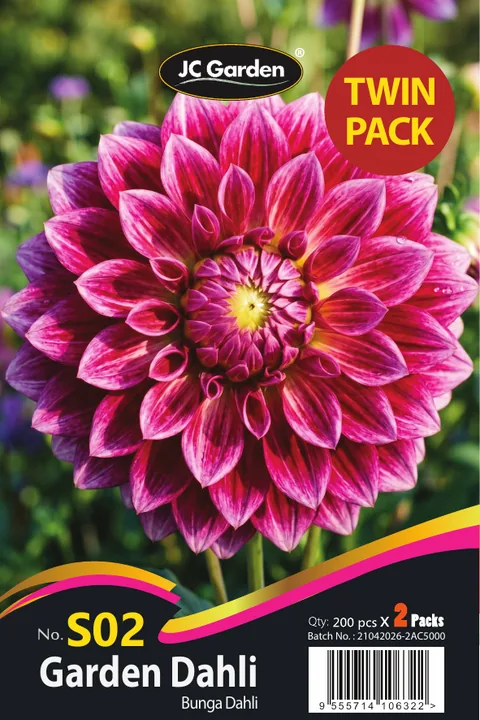
Garden Dahlia Seeds
Compact bedding dahlias from seed for pots — flowers in about 3–4 months with rain shelter in the lowlands.
Transplanting and pinching
Move seedlings into their final pots in the late afternoon, at the same depth they were growing. Water well and give them light shade for two or three days.
When a young plant has 3–4 pairs of leaves, pinch out the growing tip just above a pair of leaves. This makes the plant branch, so you get a bushier plant with more flower stems instead of one tall stem. Dwarf types rarely need staking; in a windy balcony corner, tie the main stem loosely to a short bamboo stick.
Watering in hot and rainy weather
- Hot, dry spells: water in the morning when the top 2–3 cm of mix feels dry. Small pots in full sun may need water daily. A thin mulch of dried leaves or rice husk keeps roots cooler.
- Rainy season: this is where most lowland dahlias are lost. Move pots under a roof or rain shelter, empty saucers, and clear blocked drainage holes. Water only when the mix is actually dry, not by routine.
- Water at the base, not over the flowers and leaves. Wet leaves overnight invite mildew, and wet flowers rot.
Feeding
Mix compost into the potting mix at planting. After transplanting, feed lightly every 2–3 weeks. Once buds appear, switch to a fertilizer that is not too high in nitrogen; too much nitrogen gives large leaves and few flowers. A small handful of NPK granules scattered around the pot edge and watered in, or a diluted liquid feed, both work. Never pile granules against the stem.
To work out how much liquid concentrate to use per watering can:
Flowering, deadheading and tubers
Dwarf dahlias from seed usually flower about 3–4 months after sowing, often in mixed colours and forms. Each flower lasts several days. Cut off faded flowers just above the next pair of leaves or side bud; this "deadheading" keeps new buds coming and stops the plant putting energy into seed.
Seed-grown dahlias form small tubers below the soil. In temperate countries people dig and store them; in lowland Malaysia the tubers often rot during the wet months, and plants become tired and leggy in the constant heat. Most home growers simply treat dahlias as an annual and sow a fresh batch each season. If you want to try keeping a tuber, let the plant die back, lift it in a dry spell, let it dry in shade for a few days and store it in dry cocopeat in a cool, dry room. Expect losses.
Common pests and diseases in Malaysia
- Aphids and thrips. Curled, distorted new leaves and streaky flowers. Blast with water, then spray diluted neem oil in the evening, covering leaf undersides.
- Spider mites. Fine speckling and webbing in hot, dry weather. Spray the undersides of leaves with water and use neem oil.
- Caterpillars. Holes in leaves and buds. Pick them off by hand in the evening.
- Snails and slugs. Chew seedlings after rain. Hand-pick at night with a torch.
- Powdery mildew. White powder on leaves in humid weather. Space plants for airflow, remove badly affected leaves and keep leaves dry.
- Stem and tuber rot. Plant collapses, stem base turns black and soft. Almost always wet soil. Improve drainage, shelter from rain, and discard rotted plants with their mix.
- Flower rot. Brown, mushy petals after rain. Remove affected flowers promptly.
More organic options are in the pest control guide:
FAQ
Can dahlias grow in lowland Malaysia at all? Yes, as compact plants from seed grown in pots with rain shelter. They flower well for a few months but are short-lived compared with highland plants. Large tuber-grown show varieties are much harder in the lowlands.
When is the best time to sow? Aim for flowering in a drier stretch. On the west coast, sowing from about February to July usually works better than sowing just before the year-end monsoon. On the east coast, avoid having plants in flower from November to January unless they are under a roof.
Why are my dahlia leaves big but there are no flowers? Usually too much nitrogen or not enough sun. Give at least 5 hours of direct sun and use a more balanced, flower-friendly feed.
Can I plant dahlia tubers bought from overseas? You can try, but large imported tubers often rot in warm, wet lowland soil before they sprout. Plant them shallowly in a very free-draining mix in a pot under shelter, and water sparingly until shoots appear.
For more ideas on growing in small spaces, see: