
How to Grow China Aster (Bunga Aster) in Malaysia
How to grow China aster from seed in Malaysia: best months, sowing, fresh soil to avoid aster wilt, rain shelter, feeding, pests and cutting flowers.
- Difficulty
- Medium
- Days to harvest
- 90–120 days
- Updated
- 2026-11-04
Yes, China aster (Callistephus chinensis, bunga aster) can flower in lowland Malaysia, but it is a cool-season annual and does noticeably better when it grows through the slightly cooler, less humid stretches of the year than in the hottest, wettest months. From seed, expect the first flowers in about 3–4 months, with dwarf types a little faster than tall cut-flower types. The one tip that matters most: always sow into fresh potting mix, never into soil that grew asters before. Aster wilt, a soil-borne fungus, is the main reason plants suddenly collapse just as they start to bud.
Quick facts
| Item | China aster |
|---|---|
| Sun | Full sun in the morning, 5–6 hours; light afternoon shade helps in the lowlands |
| Sowing depth | About 0.3–0.5 cm, lightly covered |
| Germination | 7–14 days |
| Spacing | 20–25 cm (dwarf), 25–30 cm (tall) |
| Days to flower | About 90–120 days from sowing |
| Container | 15–20 cm pot per plant, or a long planter box |
| Support | Dwarf types none; tall cut-flower types need a stake or netting |
Choosing a spot and container
China asters come in dwarf bedding types (about 20–30 cm tall) and tall cut-flower types (60 cm or more). For balconies and pots, dwarf types are easier: they flower sooner, stand up to wind and rain better and do not need staking.
Give them bright morning sun and some relief from the harsh afternoon sun. A balcony that faces east, or the edge of a porch with a roof, is ideal. Asters have shallow, fine roots, so a 15–20 cm pot per plant or a long planter box with plants 20–25 cm apart works well. Drainage holes are essential.
Soil and potting mix
Use a light, well-drained, fresh mix each time:
- 2 parts new potting mix
- 1 part compost
- 1 part burnt rice husk (sekam bakar) or perlite
Do not reuse mix from a pot where asters wilted, and avoid planting asters in the same garden bed two seasons in a row. The wilt fungus survives in soil for a long time, so rotation and fresh mix are your best protection.
How to sow China aster step by step
- Fill a seedling tray with fine, moist seed-starting mix.
- Sow 2 seeds per cell and cover very lightly, about 0.3–0.5 cm. The seeds are small and slender.
- Mist gently so the seeds stay in place.
- Keep in a bright, sheltered spot out of direct rain. Seedlings usually appear in 7–14 days.
- Move the tray into morning sun as soon as seedlings emerge.
- Thin to one seedling per cell by snipping the weaker one.
- Transplant when seedlings have 3–4 true leaves, about 3–4 weeks after sowing.
For more about raising seedlings in trays:
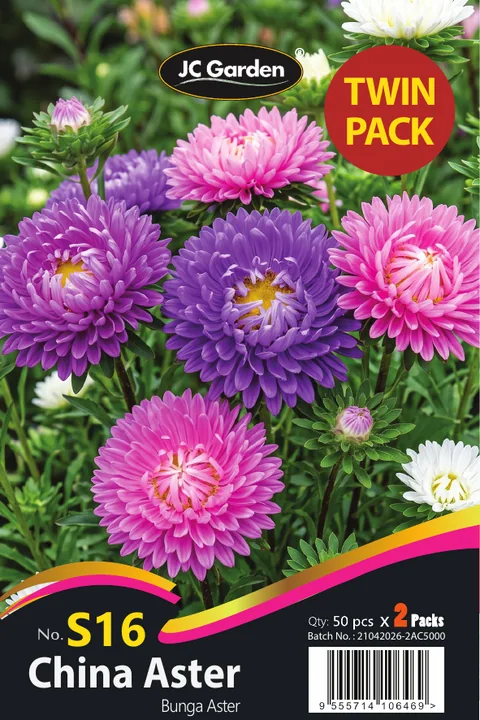
China Aster Seeds
Pompom and peony-style annuals for pots and vases — best sown for the cooler, drier weeks of the year.
Transplanting and support
Transplant in the late afternoon at the same depth, water in well and shade lightly for two days. Handle seedlings by the leaves, not the stem; damaged stems are an easy entry point for disease.
Tall varieties need support before they flop. Push a thin stake in at planting time, or stretch a square of netting about 30 cm above a planter box and let stems grow through it. You can pinch the tip of young plants once to encourage more side stems, though many dwarf types branch well by themselves.
Watering in hot and rainy weather
- Hot spells: asters dislike drying out, but they hate soggy roots even more. Water in the morning when the top 2 cm feels dry. A thin mulch helps keep the shallow roots cool.
- Rainy season: shelter pots under a roof if you can, empty saucers and make sure water drains quickly. Waterlogged roots and splashing soil both spread wilt and root rot.
- Always water at the base. Wet foliage in humid weather invites leaf spot and mildew.
Feeding
Asters are moderate feeders. Compost in the mix is enough to start. From about two weeks after transplanting, give a diluted, balanced liquid feed every 2 weeks. Once buds form, a fertilizer with a little more phosphorus and potassium than nitrogen supports flowering; too much nitrogen makes soft growth that is more prone to disease.
If you want to compare fertilizer labels or convert between nutrient forms:
Flowering and cutting
China asters produce pompom, peony, chrysanthemum-like or single flowers in purple, pink, red, white and blue tones. Each plant flowers for a few weeks. Unlike some annuals, they do not keep flowering for months, so many growers sow a small batch every 2–3 weeks during the good months for a longer show.
For a vase, cut stems in the morning when flowers are about half to three-quarters open, using clean shears. Strip the lower leaves and put stems straight into water. Removing faded flowers keeps the plant tidy and may encourage a few more side blooms.
Common pests and diseases in Malaysia
- Aster wilt (Fusarium). Plants yellow on one side, droop and die, often just as buds form; the stem base may darken. There is no cure. Remove the plant with its soil, do not compost it, and use fresh mix next time.
- Root and stem rot. Soft, dark stem base after wet weather. Improve drainage and shelter from rain.
- Aphids. Clusters on buds and new leaves. Hose off, then spray diluted neem oil in the evening.
- Leafhoppers and yellowing. Tiny jumping insects on leaves. If a plant turns yellow, stunted and makes odd greenish flowers, pull it out, as this can be a disease these insects spread.
- Caterpillars. Chew buds and petals. Hand-pick at dusk.
- Powdery mildew and leaf spot. In humid, crowded plantings. Space plants, remove affected leaves, water at soil level.
Organic sprays and other fixes are covered here:
FAQ
When is the best time to sow China aster in Malaysia? Aim to have plants growing in the slightly cooler, less wet weeks of the year. On the west coast of the Peninsula, sowing from around November to February under a rain shelter usually gives the best flowers. In the hottest, wettest months, expect shorter plants and more wilt.
Why did my asters suddenly wilt even though the soil was wet? Most likely aster wilt or root rot, both of which block water from reaching the leaves. Remove the plant and its soil, and start again in fresh mix in a different pot.
Can I grow China aster in the highlands instead? Yes, they are much happier in cool highland gardens, where plants grow taller and flower longer. In the lowlands, dwarf types in pots are the most reliable choice.
Is China aster the same as the purple "aster" daisy bush? No. China aster is an annual grown from seed each season. The perennial "aster" or Michaelmas daisy is a different plant.
For more ideas on growing in small spaces, see: