
How to Grow Bell Pepper (Capsicum) in Lowland Malaysia
How to grow bell pepper in Malaysia: why it is harder than chili, rain shelter, pots, staking, feeding, flower drop, pests and harvesting green or red.
- Difficulty
- Harder
- Days to harvest
- 100–130 days
- Updated
- 2026-11-04
Bell pepper (lada benggala, capsicum) can be grown in lowland Malaysia, but it is noticeably harder than chili. Most commercial capsicum is grown in the cooler highlands or under rain shelters, because lowland heat makes flowers drop, and constant rain brings fruit rot and leaf disease. From seed, expect green peppers in about 100–130 days, and coloured ones 2–3 weeks later. The one key tip: grow it in a large pot under a rain shelter or porch roof where it still gets plenty of morning sun — keeping rain off the leaves and fruit makes the biggest difference.
Quick facts
| Item | Bell pepper |
|---|---|
| Sun | 6 hours of direct sun, ideally morning; light shade in the hottest afternoons |
| Sowing depth | About 0.5 cm |
| Germination | 7–14 days |
| Spacing | 45–60 cm; one plant per pot |
| Days to harvest | Green: about 100–130 days from sowing; red/yellow: 2–3 weeks more |
| Container | At least 15–20 L |
| Support | Yes — a stake or cage before fruiting |
Choosing a spot and container
The ideal lowland spot gets 6 or more hours of sun, mostly in the morning, with some relief from the harshest sun after about 2 pm, and has a roof overhead. A terrace-house porch edge, a covered car porch with open sides, or a balcony under the upper floor's ledge that still gets direct sun all work. A clear plastic rain shelter in the yard is the classic setup.
Use one plant per 15–20 L pot or polybag, with good drainage holes. Raise pots on bricks or pot feet so water never pools around the roots.
Choosing varieties and timing
Look for varieties labelled heat-tolerant or suited to tropical lowlands where possible; blocky, thick-walled types are usually the most demanding. Sow so that plants flower outside the heaviest monsoon rain — the calendar marks February to July as the easier sowing months. Sowing during or just before the wettest weeks risks rotting flowers and fruit.
Soil and potting mix
Bell peppers like a rich, loose mix that holds moisture but drains quickly:
- 2 parts potting mix or garden soil
- 1 part compost
- 1 part burnt rice husk (sekam bakar), cocopeat or perlite
Mix in a handful of compost at the bottom of the pot and a dose of balanced granular fertilizer at the label rate.
How to sow bell pepper step by step
- Fill a seedling tray or small cups with fine, moist seed-starting mix.
- Sow 1–2 seeds per cell, about 0.5 cm deep, and cover lightly.
- Keep warm, bright and sheltered from rain. Keep the mix moist but not wet. Seeds usually germinate in 7–14 days.
- Give seedlings morning sun once they are up so they do not stretch. Keep the strongest seedling per cell.
- At 4–6 true leaves (around 5–6 weeks), harden them off over a few days with longer sun exposure.
- Transplant into the final pot in the late afternoon at the same depth, water well and give light shade for 2–3 days.
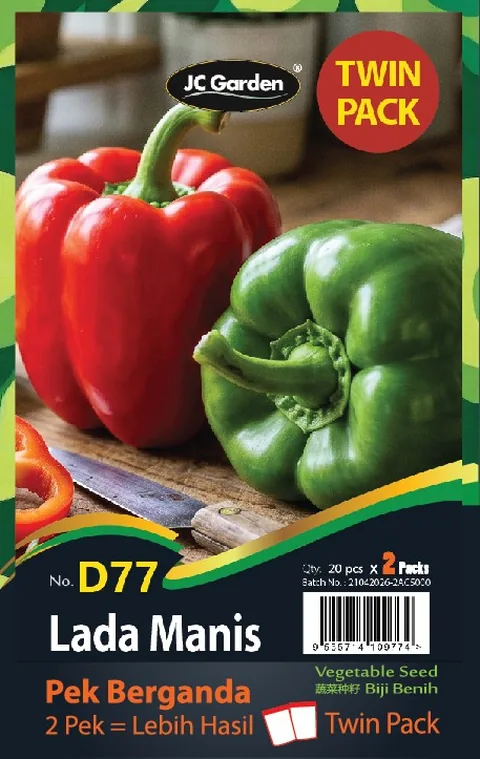
Bell Pepper Seeds
Sweet capsicum for big pots under a rain shelter — harder than chili in lowland heat, but very rewarding.
New to raising seedlings? The basics are here:
Staking and pruning
Bell pepper branches are brittle and fruits are heavy. Push a stake (or a small tomato cage) into the pot at transplanting, and tie the main stem loosely with soft string as it grows. Add ties to branches carrying fruit.
Removing the small shoots and leaves below the first fork improves airflow and reduces soil splash. Many growers also pinch off the very first flower (the "king flower" at the first fork) so the plant puts energy into growth before fruiting. Do not strip too many leaves above the fork — the leaves shade the fruit and prevent sunscald.
Watering in hot and rainy weather
- Keep moisture even. Water when the top 2–3 cm of mix feels dry. In hot spells that is usually every morning, sometimes again in the late afternoon for smaller pots.
- Rainy season: keep plants under shelter, empty saucers and clear drainage holes. Waterlogged roots and wet leaves lead to rot and leaf spot.
- Mulch the surface with dried leaves, straw or rice husk to keep the roots cooler and the moisture steadier.
- Uneven watering — dry, then soaked — is a main cause of flower drop and blossom-end rot (a dark, sunken patch at the bottom of the fruit).
Feeding
- First 4–6 weeks after transplanting: a balanced fertilizer every 2–3 weeks (granular) or a diluted liquid feed weekly, at the label rate.
- From flowering: switch to a formula with more potassium (K) than nitrogen (N), and top up compost monthly. Calcium also matters for preventing blossom-end rot; even watering helps the plant take it up.
Too much nitrogen gives a big, leafy plant with few peppers. To mix liquid feeds accurately:
Flowering and fruit set
Bell pepper flowers pollinate themselves, helped by wind and insects. In lowland heat, flowers often drop when days are very hot, when the plant is stressed by dry soil, or when there is too much nitrogen. To improve fruit set:
- Give afternoon shade with a 30–50% shade net in the hottest months.
- Water evenly and mulch.
- Tap flowering branches gently in the morning to shake pollen loose.
- Do not overload a young plant; allow a few fruits at a time.
Common pests and diseases in Malaysia
- Thrips and mites. Curled, crinkled or bronzed leaves and stunted tips. Check the undersides of leaves; hose them off and spray neem oil every 5–7 days in the evening. Blue sticky traps help catch thrips.
- Aphids and whiteflies. Sap-suckers that spread viruses. Use yellow sticky traps, spray neem or mild soapy water, and remove plants with yellow, mottled, distorted leaves.
- Fruit flies. Maggots in ripening fruit. Harvest promptly and bag young fruits with paper or mesh bags.
- Anthracnose and fruit rot. Sunken dark spots on fruit, worse in rain. Keep plants under shelter, remove affected fruit and avoid overhead watering.
- Sunscald. Pale, papery patches on the side of fruit facing the sun. Keep leaf cover and use shade cloth in the hottest months.
- Sudden wilting while the soil is wet. Often bacterial wilt or root rot. Remove the plant and do not reuse the mix for pepper, chili, tomato or brinjal.
More organic fixes:
Harvesting
Pick green peppers when they are full size, firm and glossy, about 100–130 days from sowing. For red, yellow or orange peppers, leave them on the plant another 2–3 weeks until fully coloured; they become sweeter, but the plant slows down fruiting while they ripen. Cut the fruit with shears, keeping a short stem — pulling can snap the branch.
FAQ
Why do my bell pepper flowers fall off? Usually heat stress, uneven watering, too much nitrogen or too little sun. Shade in the hottest afternoons, water evenly and feed for flowering.
Can I grow bell pepper on a balcony? Yes, if it gets at least 6 hours of direct sun and is sheltered from heavy rain. A 15–20 L pot per plant is the minimum.
Why are my peppers small and thin-walled? Lowland heat, a small pot or a hungry plant. Use a bigger pot, feed regularly and limit fruit numbers on young plants.
Is chili easier than bell pepper? Yes. If you are new to the pepper family, start with cili padi first: